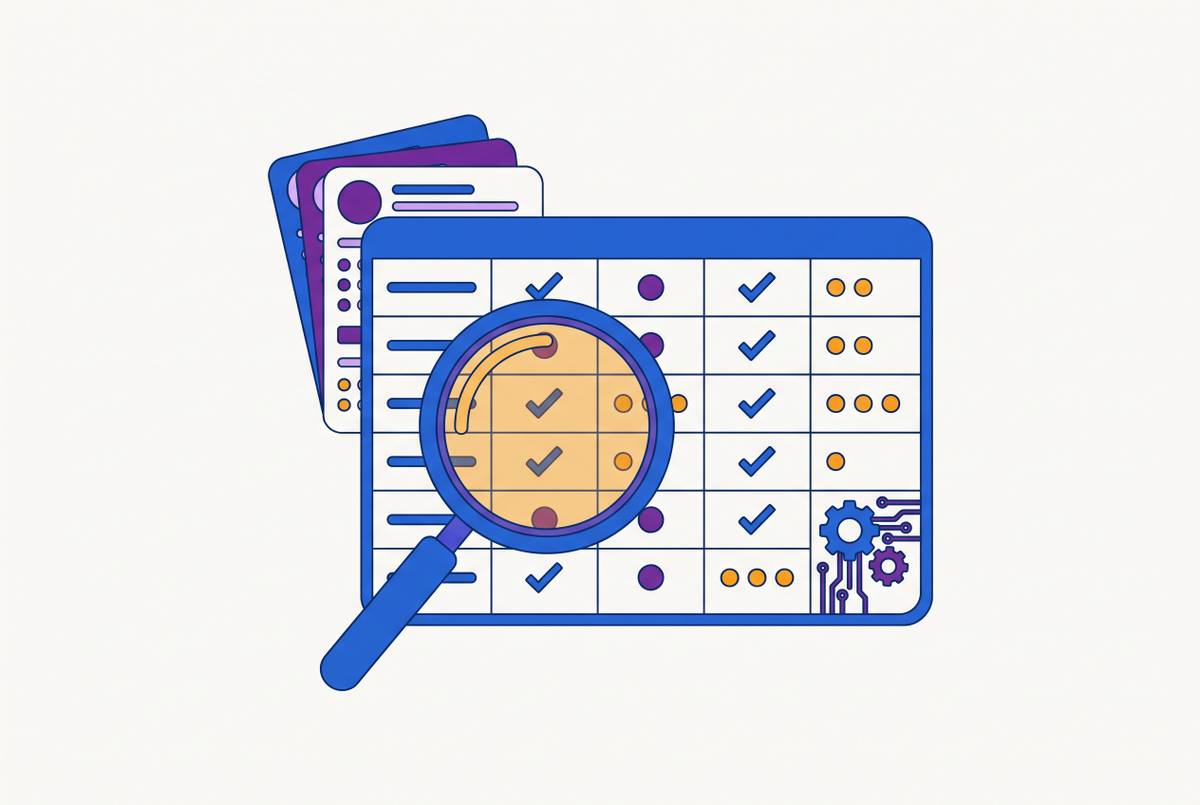
Procurement Criteria for AI Agents That Log Into Payer Portals as a Credentialed User
Credential security and audit logs are the foundation for agent procurement.
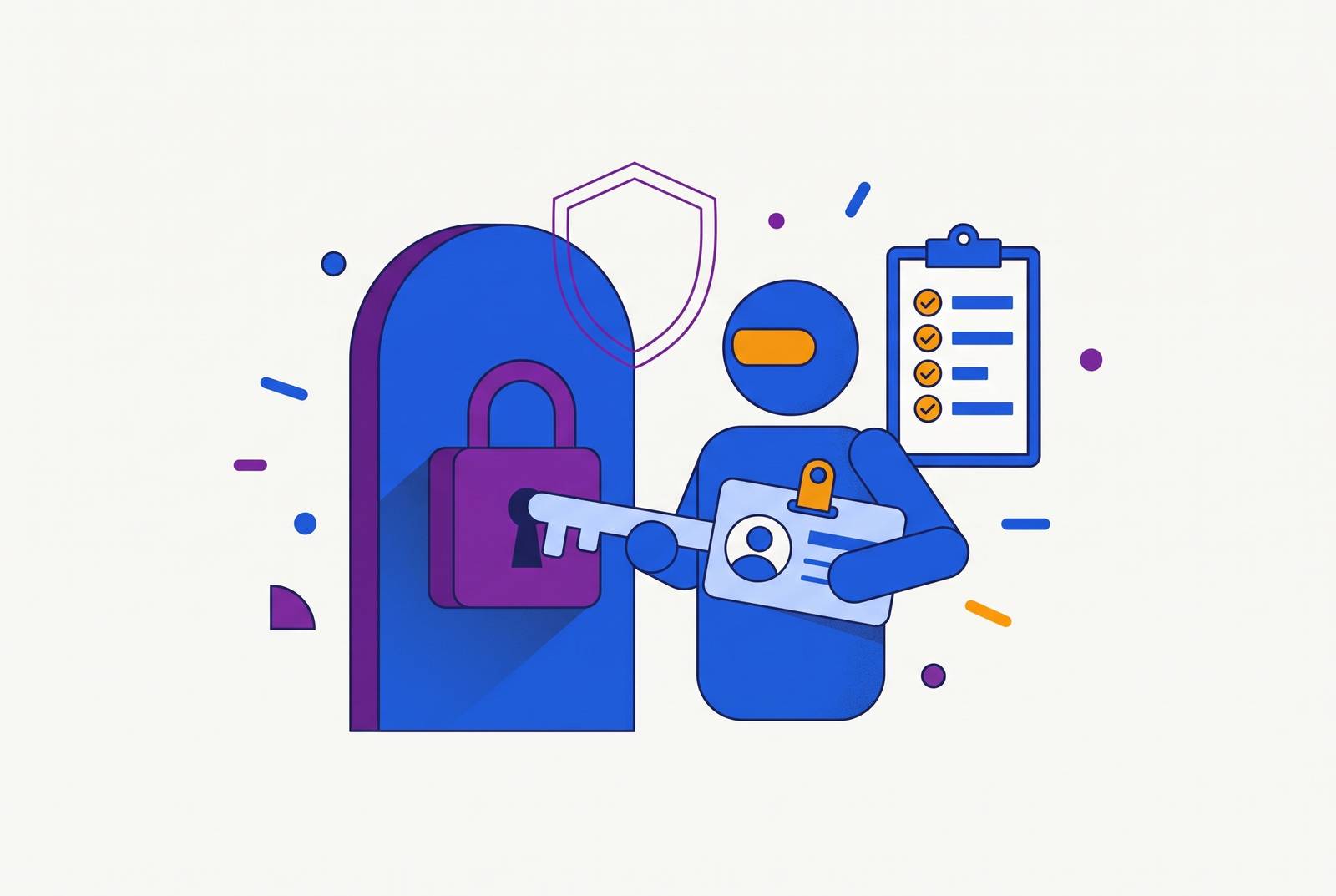
Computer-use agents can automate prior authorization submissions without payer API access by logging into insurance portals and working through screens as a billing specialist would. Procurement for prior authorization and claim denial automation must therefore start with credential security, identity governance, HIPAA coverage, and attributable audit logs. Deploying a qualified agent requires workflow completeness, portal resilience, and a credible FHIR migration plan.
Why payer portal agents are a distinct procurement category
A payer portal treats an authenticated agent’s actions as activity by the account holder. The agent can navigate screens and submit information on that person’s behalf, rather than merely produce a recommendation for staff to review. That distinction changes the basis of procurement. If the practice does not give agents and humans separate identities, the portal’s records cannot show which of them did what.
This operating model fills a gap in healthcare transactions. Although the standard X12 278 transaction supports prior authorization and handles a sizable share of it, far less of this work is done electronically than is the case for claims, remittance, or eligibility. When there is no API or standard transaction that can be used, browser automation works through the payer’s screens. The practice is therefore buying an actor inside a third-party system.
How can an AI agent submit prior authorizations without payer portal API access?
A computer-use agent gets a task and uses vaulted credentials to open a live browser session. It navigates login, including MFA, reads portal screens as screenshots, and infers what to click or type. It then extracts relevant fields, fills and submits forms, reads the response, and writes back to the EHR or billing system. The screen becomes the agent’s working interface. That architecture creates three distinct risks involving PHI exposure, credential attribution, and dependence on changing portal layouts.
Screenshots can show patient names, member IDs, diagnosis codes, and details of the service. When those images go to a model endpoint, PHI goes into the model pipeline. Meanwhile, a portal redesign can break screen-based navigation, and a human account can make the agent’s activity appear to belong to a staff member.
Authentication also differs by the system being accessed. SMART Backend Services supports system-level EHR jobs, while payer APIs use organization-level client credentials or mTLS. Portal access instead depends on a vaulted login. Its username, password, and MFA are stored encrypted and injected at call time, making the handling of that identity the first technical qualification gate.
Credential security and identity governance as the first procurement gate
A vendor should provide a dedicated service account or dedicated portal user account for each agent, separate from human staff accounts. Shared human passwords should disqualify the proposed architecture. They make the portal’s record ambiguous and undermine the practice’s ability to establish who performed a disputed action. A vault protects the secret, but does not by itself separate the agent’s identity from a person’s.
Procurement should require encrypted credential storage, with no secrets in plaintext configuration files or environment variables. MFA handling must also be auditable, including how tokens are generated and stored. Every agent identity needs a named owner accountable for rotation and revocation, supported by a rotation policy with enforceable timelines. The practice needs documentation that connects each credential to an accountable person.
An agent that only checks authorization status should not have billing account management or administrative portal permissions. Narrowly scoped access limits exposure compared with broad privileges. If a payer reports suspicious activity, a dedicated identity and precise activity record allow the practice to establish what the agent did, when it acted, and which credential it used.
HIPAA obligations that attach specifically to portal-operating agents
An AI vendor whose agent accesses portal PHI on a healthcare organization’s behalf is a business associate under HIPAA. Procurement must get a signed Business Associate Agreement before any PHI goes into the system. This rule also applies to pilots and demonstrations that use real patient data. The BAA is part of the liability framework.
The PHI boundary extends beyond the browser session. Procurement should get proof that a BAA also covers any third-party model provider the agent uses, along with the screenshot stores and agent logs. Encryption in transit and at rest should cover screenshot and session data. The vendor’s risk analysis must cover the portal agent itself as well as the broader platform.
HIPAA’s Security Rule access-control standard applies to “persons or software programs,” so software agents are not outside its scope. Business associate direct Security Rule liability predates the 2025 proposed amendments, while proposed requirements involving encryption, MFA, and network segmentation depend on finalization. SOC 2 Type II certification provides a baseline operational control signal that complements, rather than replaces, HIPAA documentation.
Audit logging requirements that make agent actions attributable and defensible
A defensible audit trail connects the portal session to the action, the response, and the resulting clinical or billing record. Each session needs a timestamp, agent identity, and credential identifier, never the credential itself. The record must show pages navigated, forms submitted, and fields entered, with field types captured without necessarily recording PHI values. Outcomes need their own record as well. Approval, denial, pending status, and errors must remain distinguishable from what the agent subsequently wrote into the EHR or practice management system.
Human intervention belongs in the same chain. When the agent escalates a case, the log should explain when and why, and preserve the human decision with the agent’s actions. Failed authentication attempts and lockouts should be identifiable separately from successful sessions. Procurement should also establish where logs reside, how long they are retained, and who controls access. The practice needs immutable records that it can export in a standard format for independent retention and review.
Syll illustrates how execution can be translated into logs, keyframes, and approval checkpoints for inspection. Plover makes plans and replanning persistent and inspectable, supporting failure localization and repair. These design principles leave healthcare compliance to be verified. Applied to procurement, they support a practical requirement that evidence identify the step that failed and support correction without reprocessing an entire case. That evidence also gives the practice a basis for answering payer disputes and regulatory questions.
Workflow completeness and what "end-to-end" must mean for a payer portal workflow
Logging in and submitting a form is task automation. If the agent stops there, staff still have to track decisions, update records, and handle denials. The manual bottleneck has simply moved downstream. Operational value therefore depends on what happens before submission and after the portal accepts the request.
A complete workflow starts by detecting the need for an authorization check from an EHR order or scheduling event. It checks the authorization requirements for the payer and service, then assembles supporting clinical documentation from the EHR. Portal login and submission follow those preparation steps. The agent must subsequently revisit pending decisions and record the authorization number, denial code, or pended status in the EHR or practice management system. When denied, the case needs reason classification and routing to an appeal workflow or human escalation.
Those steps cross several systems and permission boundaries. Write-back is a separate, narrower capability than submission, so procurement should verify distinct access controls. The decisive test is a denied authorization. The vendor should demonstrate what the agent does, what it logs, what it hands to staff, and what the staff member sees in the EHR. An answer that ends with “it flags the denial” leaves the workflow incomplete.
Portal resilience and how vendors should handle UI changes, MFA challenges, and session failures
A working demonstration establishes capability only for the portal state shown. Changes to a payer’s UI can call for re-scripting and re-testing, so the vendor must keep maintaining the agent. When an agent fails silently, the harm can be especially great because staff may only find out that submissions are missing when claims are denied. Procurement should require detection and immediate alerts for login failures, unexpected page states, and MFA challenges the agent cannot resolve. Indefinite retries are not an adequate recovery strategy.
The vendor should put in writing how it handles time-based tokens, SMS codes, and authenticator app prompts, including what it does when MFA credentials expire or change. Failures need enough audit detail for staff to reconstruct the attempt and resubmit manually if necessary. Recovery commitments belong in the contract itself. Procurement should obtain an SLA for portal redesign recovery, the number of portals actively maintained, and the process and timeline for adding another payer.
Session closure also requires explicit attention. An agent should close sessions cleanly after completing a workflow, because an open session creates unnecessary exposure. Procurement should verify that this behavior is documented. Automation must also be checked against each payer’s terms of use before it goes live, since some portals ban automated access.
The CMS-0057-F timeline and what it means for portal agents bought today
CMS-0057-F makes the channel strategy a procurement issue now. The rule sets January 1, 2027 as the deadline for impacted payers to offer FHIR-based prior authorization APIs. Its timeline also includes January 1, 2026 for faster authorization turnaround requirements, including seven calendar days for standard requests and a shorter expedited window, and March 31, 2026 for the first public metrics. Impacted payer categories include Medicare Advantage, Medicaid, CHIP, and Qualified Health Plans on the Federally Facilitated Exchange. These milestones give a portal-only investment a time horizon.
The appropriate architecture for 2026–2027 is dual-stack. FHIR APIs serve payers with compliant endpoints, while portal automation and other legacy channels serve relationships that still require them. Procurement should ask the vendor which Da Vinci implementation guides it supports, including Coverage Requirements Discovery, Documentation Templates and Rules, and Prior Authorization Support. These distinguish requirements discovery, documentation assembly, and submission without treating “FHIR readiness” as a single capability.
The transition will not be uniform across payers. Variable implementations mean portal agents will remain necessary for a meaningful portion of relationships beyond the deadline. Every vendor should therefore provide a payer-specific roadmap showing the current channel, planned migrations, and their timing. The same roadmap should explain what happens where a payer does not meet the January 2027 mandate.
How to structure the vendor evaluation across these criteria in practice
A vendor that fails an early gate should not advance because its demonstration is compelling. The first gate requires an executable BAA, SOC 2 Type II certification, and documentation of BAA coverage for the underlying model provider. If the vendor fails this gate, the review ends before any patient data is shared.
The second gate tests credential and identity architecture through documentation. It requires dedicated accounts, vaulted credentials injected at call time, named owners, and rules that can be enforced for rotation. The third gate examines complete, immutable, exportable logs at session and field level, with independent practice access. These gates establish whether the agent can be operated accountably. Only then does a denial walkthrough test workflow completeness, followed by contractual maintenance commitments and the payer-specific FHIR roadmap.
Multi-location groups, PE-managed portfolios, and enterprise health systems need more controls as they grow. Credentials need isolation by location or entity, while centralized log aggregation needs role-based access that prevents one practice’s PHI from being exposed to another. The workflow must be set up to handle different payer mixes and authorization protocols without the core platform having to be rebuilt. Deployment speed is also an operational qualification. For operators managing multiple sites simultaneously, a vendor unable to go live across a portfolio within weeks is not a practical option.
A named practice, case volume, and documented outcome make the vendor’s claims more evaluable than a controlled environment alone. The vendor must finally show a production deployment in which its agents logged into real payer portals, handled real denials, and produced auditable logs.