Credential and System Access Management for Deployed AI Agents
Healthcare AI agents need separate credentials and strict access limits to prevent breaches.
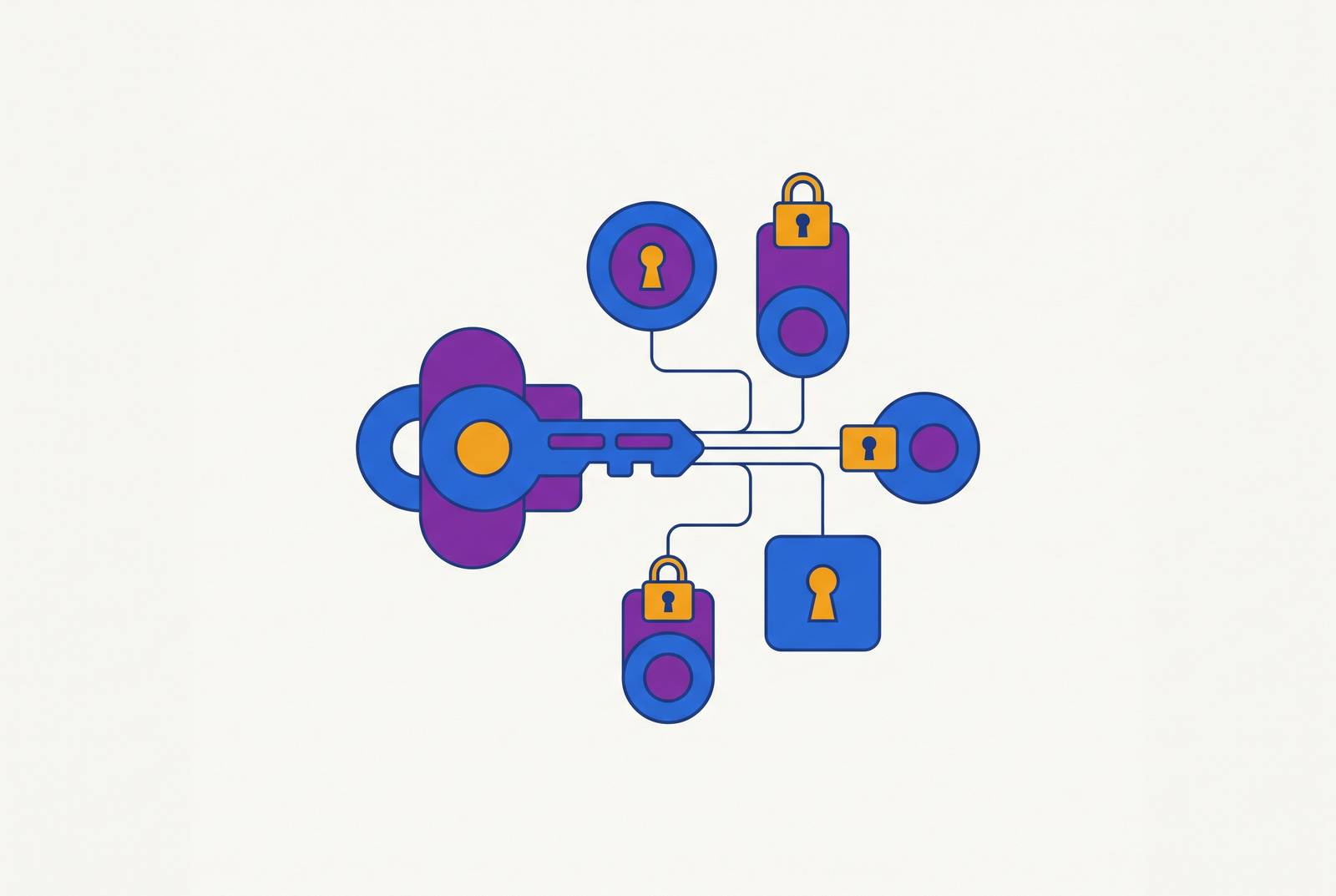
Deployed AI agents in healthcare settings do not connect to systems through clean APIs. They operate the same way a staff member does: reading a screen, clicking, typing, and navigating payer portals and EHRs, without API integrations. That means the agent needs a real login, credentials that open the same doors a human's credentials would open, because the interface itself is the integration point.
That single fact creates the entire problem this piece is about. An agent with a login is not the same kind of actor as an employee with a login, even though the credential looks identical to the system on the other end. Agents don't authenticate the way people do, and they tend to skip multi-factor authentication by default rather than complete it. They run continuously, across several systems at once, and unlike a human employee, they never clock out. A staff member's session ends when they go home. An agent's session ends when someone tells it to, or when nobody does.
The threat landscape has moved to match that difference. Identity-centric intrusions grew 380% from 2025 to 2026, and the time between a credential compromise and its exploitation has collapsed from months to hours LastPass. A stolen human password used to give a security team weeks to notice and respond. A stolen agent credential gives them hours, sometimes less, because the agent using it never stops working long enough to reveal that something is wrong.
Gartner's guidance on identity and access management states that enterprises should not force AI agents into identity paradigms built for people. Credential sharing between agents and human users, the report warns, is a shortcut. That framing matters here because the temptation to retrofit is strong. Provisioning a new service account per agent, per system, per workflow is slower and more expensive than handing an agent a staff member's existing login. The practical implication is unavoidable, though: deploying a computer-use agent in a clinical environment means designing access governance from scratch for a non-human actor, not bending the existing human framework until it sort of fits.
The scale of non-human identities already in enterprise environments and why healthcare amplifies it
Non-human identities already outnumber human ones by an enormous margin, and the gap is not closing. In the average enterprise environment in 2025, there were between 82 and 144 non-human identities for every single human identity, and that ratio is still climbing 1Password. Most organizations have no clean inventory of what all those machine identities are doing, let alone what they're authorized to do.
The numbers underneath that ratio are worse than the ratio itself. One in twenty non-human identities carries full-admin privileges, and only 38% of total NHIs had been active within the last 9 months 1Password. A large share of the most powerful credentials in a given environment sit dormant, forgotten, and still fully live. Nobody is watching them because nobody remembers they exist, yet they'd grant an attacker the same access they'd grant a legitimate process.
Healthcare doesn't just inherit this problem, it multiplies it. An agent working across a multi-location practice can accumulate access across many environments simultaneously, since systems like EHRs, payer portals, clearinghouses, and scheduling platforms each require separate logins. A single deployed agent, doing one job across a multi-location practice, can accumulate system access across environments in a way that no individual human employee typically would.
The structural risk isn't that agents exist in these systems. It's that they inherit the worst habits of human credential management, but at a scale and speed no human process ever ran at: shared accounts, sessions that never expire, and permission scopes far broader than any single task calls for. And because these credentials carry PHI access, a compromised agent credential in healthcare isn't merely a security incident to log and move past. It's a potential HIPAA breach across every system that credential can reach.
The most common failure in deployed agent access: over-privileged agents running on shared credentials
The single most consistently reported failure in deployed agent security is not exotic. Agents get granted more access than their job requires, routinely, across systems, datasets, and endpoints that have nothing to do with the task in front of them. That finding appears repeatedly in Gravitee's December 2025 and April 2026 State of AI Agent Security surveys, standing as the headline result. It's the headline result.
The root cause traces back to shared service accounts and inherited logins. Somewhere along the deployment path, an agent got handed a staff member's credentials, or a shared departmental account that was never scoped down to anything resembling least privilege. Survey responses point to budget friction as the driver: teams check the compliance box on paper while the actual implementation quietly relies on shared accounts, because provisioning individual, properly scoped credentials for every agent takes time and money nobody budgeted for.
The exploit pattern that follows from this is not hypothetical. Translate that into a clinical setting and the shape of the risk becomes obvious: an agent credential compromised mid-session on a payer portal hands an attacker authenticated access to whatever systems that agent touches, all without tripping a single human login alert, because there was no human login to begin with.
The scale of exposed credentials sitting in public code repositories makes this worse than a one-off incident. GitGuardian's State of Secrets Sprawl 2026 counted nearly 29 million new hardcoded secrets in public GitHub commits during 2025 alone, with AI-assisted commits leaking secrets at roughly double the rate of hand-written ones, and something like 24,000 secrets are in MCP configuration files on public GitHub Akeyless. Worse still, 64% of secrets leaked back in 2022 were still valid as of 2026 reporting Akeyless. Hardcoding a credential into an agent's configuration is the default behavior of teams moving fast. It's the default behavior of teams moving fast, and the secret doesn't expire just because the project that used it did. Illustrating the concrete exploit pattern this creates, the 2025 case saw stolen OAuth tokens from the Drift–Salesloft integration give attackers unauthorized access to customer Salesforce environments, resulting in data exposure across multiple organizations, per Akeyless research.
Least-privilege access for agent actors
Least privilege for a human employee means scoping access to their job function: a scheduler gets scheduling access, a billing coordinator gets billing access. For an agent, least privilege means scoping access to task function rather than job function, and those are not the same thing. A human employee might hold broad access because their role touches many parts of a system over the course of a week. An agent built to do one narrow thing should never inherit that breadth just because it's running under that employee's login.
A scheduling agent needs to read and write appointment slots. It does not need access to billing records, clinical notes, or the payment functions inside a payer portal, even though the human staff member whose credentials it might be using has all of that access as a matter of course. Scoping decisions have to be made deliberately, system by system: which platforms the agent is allowed to authenticate into at all, which specific screens or modules within each platform it can touch, whether it's permitted to submit and approve actions or only draft them for human review, and whether its session should persist across tasks or force a fresh authentication each time.
The theory runs into the reality of healthcare software. EHRs and payer portals were built with human roles in mind, and most don't expose fine-grained permission scopes to an external, non-human actor. So least privilege often can't be enforced at the system level. It has to be enforced one layer up, at the orchestration layer, where the organization deploying the agent builds the guardrails the underlying system was never designed to offer.
Dynamic credentials point toward a real solution to this tension. Instead of a long-lived login sitting in an agent's configuration indefinitely, a dynamic credential gets issued only when it's needed and expires automatically once the task is done, enforcing what's sometimes called zero standing privilege. That approach removes the long-lived secret from the agent's logic entirely, which resolves the underlying conflict between keeping an agent operationally useful and keeping its access minimal. For workflows built around short-lived, task-specific agents spun up and torn down repeatedly, ephemeral authentication fits the architecture far better than a persistent login ever could.
Audit trails and session governance: what "monitoring" means for an agent running at 2 a.m.
Human-oriented access control assumes there's a person at the keyboard, and every anomaly-detection system, session timeout, and audit log convention gets calibrated around that assumption: business hours, expected click volumes, recognizable navigation paths. An agent breaks every one of those calibrations just by doing its job correctly. High action volume, activity at 2 a.m., the same navigation path repeated hundreds of times, zero idle time between tasks: all of that reads as suspicious under a human-behavior model, and all of it is completely normal for an agent that never sleeps.
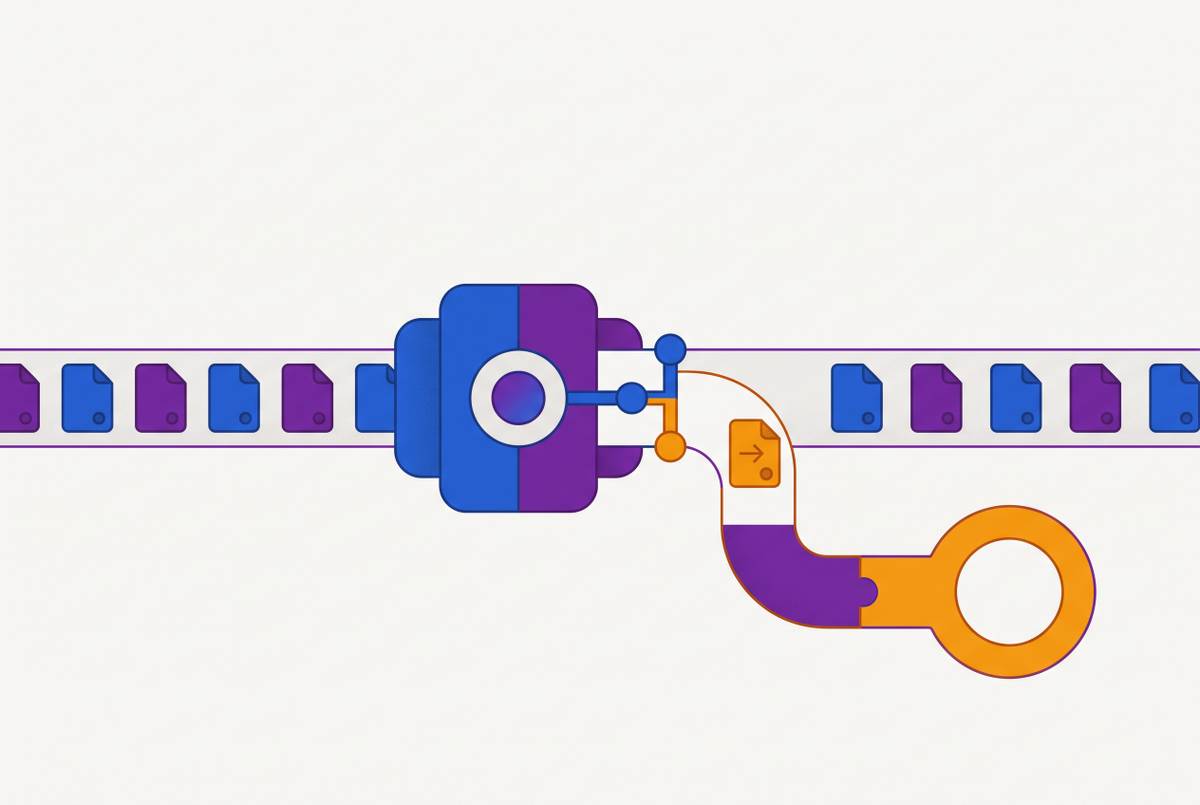
A useful audit trail for an agent has to capture more than a login event. It needs every action taken within a session (each click, each form entry, each submission), which credential executed which task and when, whether the task completed, was abandoned, or errored out, and any system response the agent hit that required a judgment call, a denial screen, an unexpected UI state, something outside the expected flow.
That capability gap is not closed yet, and security leaders know it. In Gravitee's survey, better tooling for real-time visibility into agent behavior ranked as the second-highest priority among respondents at 24.7%, trailing only industry standards for agent governance broadly at 24.9% Gravitee State of AI Agent Security (April 2026). Monitoring an agent in real time remains an unsolved problem. It's the thing security teams say they need most and don't yet have.
Session governance sits right alongside this. An agent should not hold an open, authenticated session indefinitely between tasks. Defined session expiry policies that force re-authentication at set intervals shrink the window of exposure if a credential gets compromised while the agent is mid-run. And for anything touching PHI, the audit log itself has a compliance dimension that goes beyond good engineering practice: it must capture record-level access events, retain them for the legally required period, and remain available for breach investigation. Agent activity logs are part of the compliance record, full stop. They're part of the compliance record, full stop.
Multi-agent architectures and the credential surface
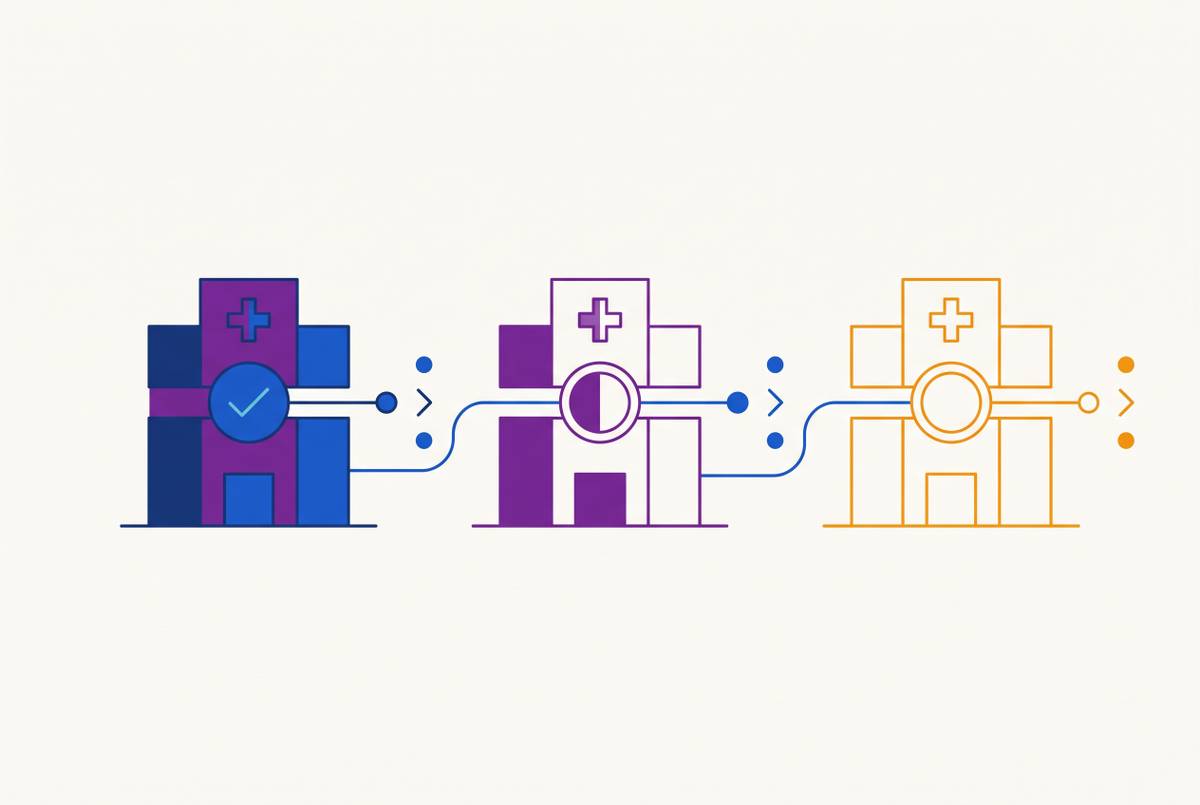
Complex healthcare workflows rarely run on a single agent. A prior authorization request might involve one agent pulling clinical criteria out of the EHR, a second navigating the payer portal to actually submit the request, and a third watching for the approval to come back. Each of those agents needs its own credential, scoped to its own system, because each one is doing a distinct job in a distinct environment.
The complication arrives the moment these agents start handing work to one another. If an orchestrating agent can instruct a sub-agent to submit a form, that orchestrator has effectively inherited execution authority over whatever the sub-agent's credentials allow. Splitting a workflow into smaller agents doesn't automatically solve the credentialing risk; it can just relocate it. Research on the OS-Marathon benchmark, run by teams at Microsoft, the University of Oxford, and Georgia Tech, found that errors accumulate and propagate across solver agents in long, repetitive task chains. A single bad credentialing decision at one node in that chain doesn't stay contained. It cascades.
The fix has to be architectural, not procedural. Each agent in an orchestration should hold credentials only for the systems it directly touches, never credentials on behalf of another agent in the chain. Orchestrating agents should authenticate to the orchestration layer itself, not to the downstream systems its sub-agents operate, because the authority to direct another agent is a fundamentally different permission than the authority to operate the system that agent touches. And trust delegation between agents needs explicit boundaries: an instruction passed from an orchestrator to a sub-agent should never implicitly widen that sub-agent's credential scope.
Cloud infrastructure is starting to build toward this. Google Cloud's Vertex AI Agent Engine assigns per-agent identity principals bound to trusted runtime environments, so a credential stolen from one agent in an orchestration can't be replayed to impersonate another. That pattern, per-agent identity rather than shared or inherited identity, is becoming a reference point for how multi-agent systems ought to handle credentials generally.
Translating HIPAA access control requirements into agent-specific operational policies
HIPAA's Security Rule was written with human workforce members in mind, and its access control language reflects that: unique user identification, emergency access procedures, automatic logoff, encryption and decryption. None of those provisions mention agents, because none of them existed when the rule was drafted. That doesn't mean the requirements don't apply. It means each one needs a translation.
Unique user identification means each deployed agent gets its own credential identity, distinct from any human staff member's and distinct from every other agent in the environment. A shared credential violates this requirement even when the sharing happens between an agent and a system account rather than between two people, because the identification is no longer unique. Automatic logoff means session expiry has to be defined explicitly for agents, since an agent holding an open, authenticated EHR session with no time limit violates the spirit of that control even though no human is technically "logged in" anywhere.
Audit controls under HIPAA require a mechanism to record and examine system activity, and for an agent that means activity logs granular enough to support a breach investigation. Agents themselves are not workforce members under HIPAA's definitions, but the covered entity remains fully responsible for whatever PHI access those agents generate. Agent credential governance isn't a side project sitting outside the organization's access management program; it's part of that program.
SOC 2 Type II adds a second layer of obligation on top of HIPAA. Agent credential handling has to line up with the access control and monitoring commitments a vendor has made under its own trust services criteria, and an agent that bypasses those controls creates audit exposure for the vendor as well as the practice using it. The practical artifact that ties all of this together is a per-agent access register: each agent's credential identity, the systems it's authorized to touch, the scope of permitted actions within each one, its session governance policy, and where its audit logs live. That register is the compliance document that maps agent access back to HIPAA's actual requirements, and it should exist before an agent ever goes live, not get assembled after the fact.
The deployment intake process for agents going live
The access decisions hardest to fix after deployment are the ones nobody made at the start. Credential scope, session policy, audit log destination: these need to be settled before an agent is provisioned.
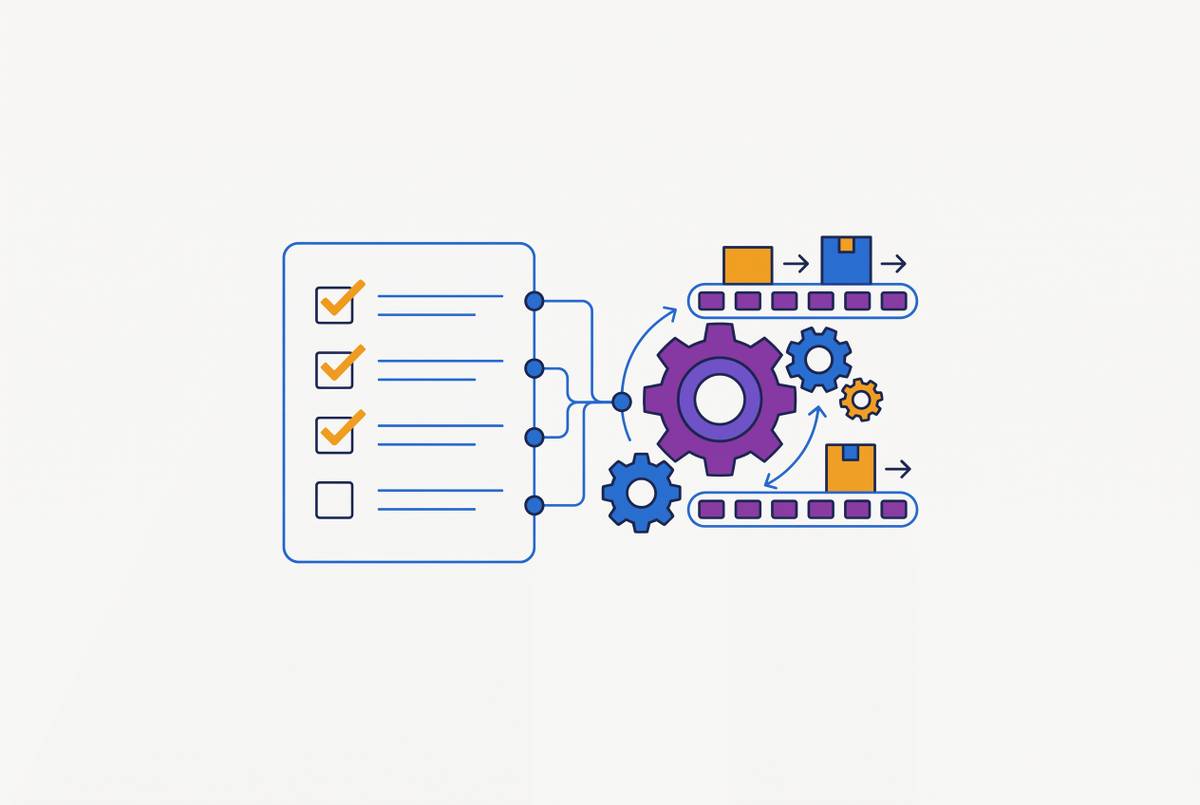
A proper intake process starts with credential provisioning: a dedicated service account built for the agent specifically, never a repurposed human login, never a shared departmental account, confirmed to be scoped to what that agent needs. Access scope documentation should follow, and it needs to be specific. "Read appointment slots, write appointment confirmations" tells an auditor something. "Access scheduling system" tells them nothing.
Session governance decisions come next: the expiry policy, what triggers re-authentication, and what happens to a task that's mid-workflow when a session expires unexpectedly. Audit log configuration needs equal attention, confirming that actions get logged at the action level, that logs land somewhere HIPAA-compliant, and that reviewing those logs is somebody's actual, named job. Incident response planning has to define what behavior triggers a credential suspension and who has the authority to pull the plug. And offboarding cannot be an afterthought: when an agent gets retired, decommissioned, or swapped for a newer version, its credential gets deprovisioned immediately. Dormant privileged non-human identities sitting around unused are among the most common attack vectors on record.
Deployment timelines compress meaningfully when these decisions are templated rather than reinvented for every rollout, standard credential intake processes for common workflows like scheduling or prior authorization or denial appeals cut the overhead without loosening the governance. And the vendor relationship matters here too: an agent vendor should be able to hand over documentation of its credential architecture, its default session governance, and its audit log format before a contract gets signed. A practice should ask for that documentation as a matter of course. A vendor that can't produce it is carrying compliance risk nobody has measured yet.
Good ongoing credential hygiene for agents already in production
The fact that 70% of secrets leaked in 2022 were still valid as of 2025 reporting says everything about what happens without ongoing hygiene: credentials issued once and never rotated, agents retired and never actually deprovisioned Akeyless. That statistic isn't a warning about some future risk. It describes a condition that already exists across a large share of deployed systems today.
Rotation has to happen on a defined schedule, and dynamic credential issuance handles that automatically by design. Where static credentials remain in use, rotation cadence needs to be written into the access register rather than left to memory or good intentions. Quarterly access reviews matter too, confirming that every active agent credential still maps to an agent that's actually running, doing actual work, and touching only the systems it was scoped to touch. None of this is glamorous work. It is, however, what separates a credential inventory that reflects reality from one that's quietly accumulated dormant, forgotten access nobody remembers granting.