How to Pressure-Test a Vendor's No-API Prior Auth and Eligibility Claims Before Signing
Ask the vendor for live payer demonstrations, not logos, before you sign.
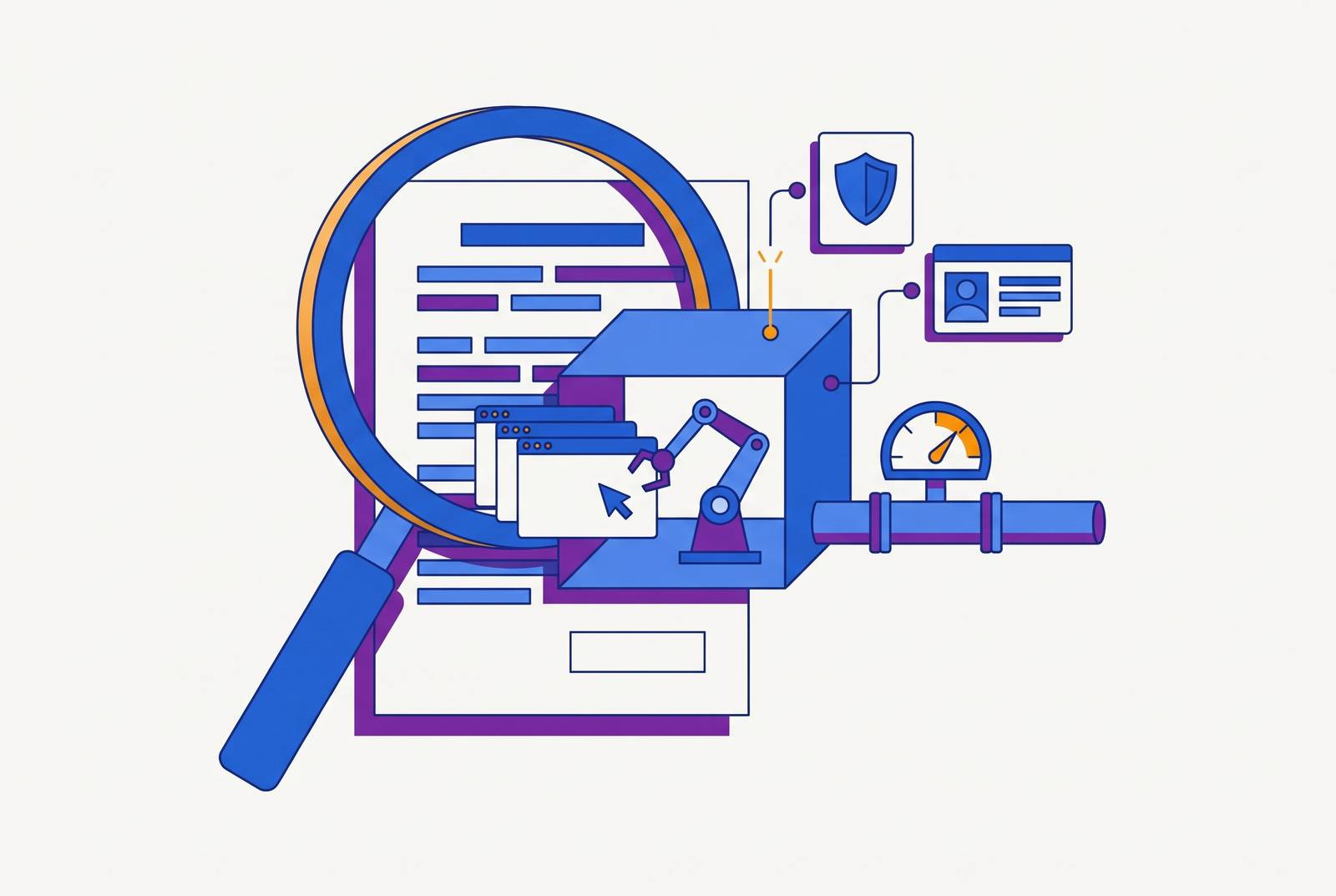
Computer-using AI agents can automate healthcare administrative workflows without API integrations by reading screens, clicking, and typing in EHR systems and payer portals. For prior authorization and eligibility, however, capability must be established payer by payer through live demonstrations, written service commitments, and documented PHI controls. Before signing, buyers need evidence that the vendor can complete their workflows, recover from portal changes, and account for every system that receives patient data.
Why no-API prior auth claims are hard to verify and easy to oversell
“No-API” describes an integration constraint. A sales pitch can promise payer coverage without saying which transactions work, which need portal access, or which still rely on staff. The buying process leaves that distinction unexamined when it accepts payer names as proof of workflow coverage. A connection is not a completed authorization.
Optexity’s 2026 analysis distinguishes three coverage layers, namely FHIR/payer APIs, API aggregators using EDI or clearinghouses, and portal-only browser automation. Clearinghouses including Availity, Stedi, and Change Healthcare route standard X12 transactions, but detailed denials, clinical attachments, and complex forms with branching logic sit inside carrier web applications. The same analysis says payers are taking up AI-assisted review faster than providers automate submissions, which puts more pressure on practices still doing portal work by hand. That pressure makes broad claims attractive, but it does not close the coverage gaps. A vendor can tell the truth about its own layer while saying nothing about the layers it does not cover.
The three automation mechanisms behind no-API claims and the failure mode in each
Static RPA uses scripts that rely on screen elements staying in the same places. It can be reliable while a portal stays stable. When a payer redesigns the interface, however, the affected bots break, and maintenance compounds across portals. To test this mechanism, buyers should request the documented bot-failure rate by payer after interface updates and the contractual window for restoring service.
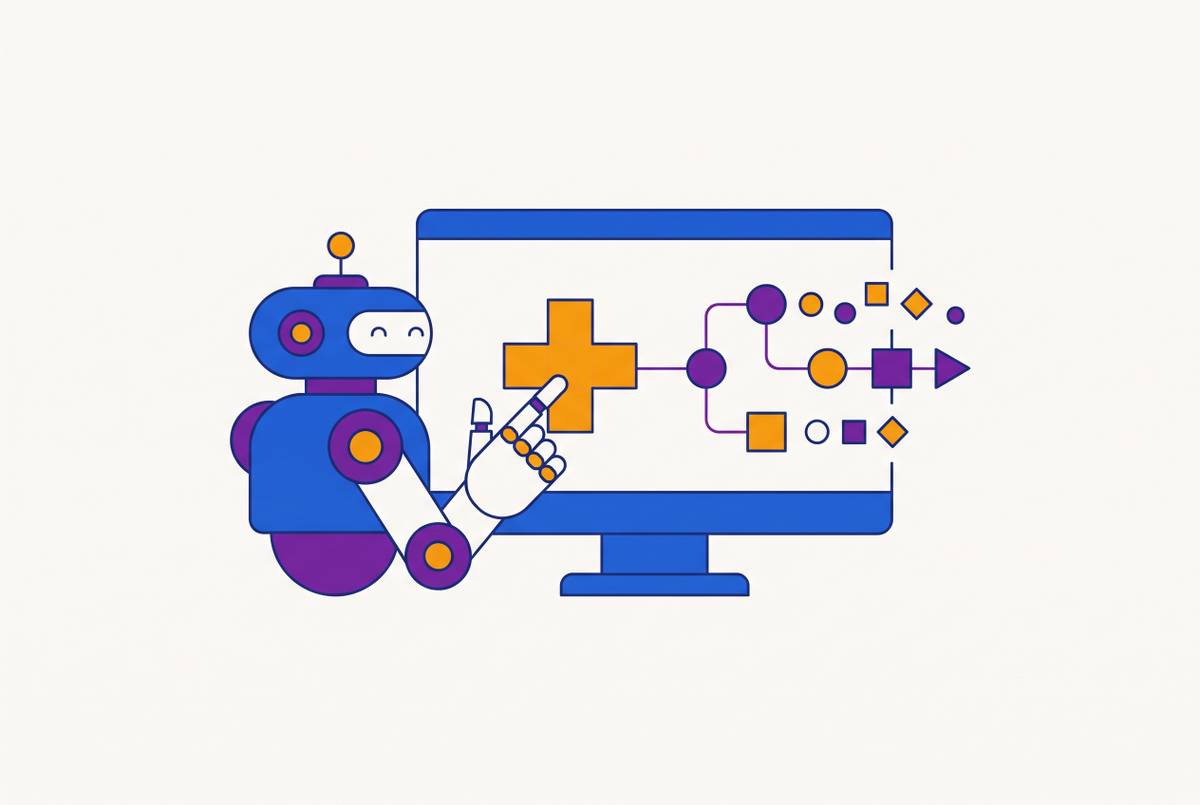
Browser-native or computer-use AI agents recognize interactive elements semantically through computer vision. They navigate forms, attach clinical documentation, submit requests, and monitor status through the interface. Self-healing locator systems can adjust when button IDs or HTML elements change, without someone having to repair the scripts by hand. Adaptation is the claim to test. A live portal demonstration is necessary to assess that claim, rather than accepting a recorded sequence as evidence that the agent handles current conditions.
Direct HTTP integration instead intercepts requests generated by the browser and calls them directly, bypassing the interface. This approach can be fast and reliable while the payer’s backend remains stable, but undocumented endpoints can break without notice when server-side structures change. Buyers should ask whether the vendor uses this method and whether the payer has sanctioned it. Authorization is a separate issue from technical success. Unauthorized use of undocumented endpoints may violate the payer’s terms of service.
Before any of these mechanisms reaches a form, it must pass authentication. Portals may require SMS-based 2FA, time-based one-time passwords from an authenticator app, or certificate-based authentication for high-volume submitters. The practical test is a live demonstration of authentication, including 2FA, for at least the practice’s two highest-volume payers. Automation that cannot complete login has not reached the workflow it promises to automate.
Why payer coverage claims require a live demonstration, not a logo grid
A payer logo does not identify the connection method or its limits. EDI may cover standard X12 transactions, while FHIR access may cover only plan types affected by CMS-0057-F. Portal-native coverage must address forms, attachments, branching logic, and the other steps the practice actually needs. The buyer should ask the vendor to show the top five payers in a live sandbox or staging environment.
For each payer, the demonstration should include login, authentication, realistic form navigation, clinical attachment upload, submission confirmation, and status retrieval. Buyers should also request the relevant payer-specific branching logic and concurrent review requests. The environment needs scrutiny as well. Ask whether it is the same environment used for production traffic or a simplified demo tenant. A simplified workflow leaves the omitted production steps untested.
Eligibility also needs to be shown working across that same payer mix. A practice may use Availity for one patient and separate portals for Aetna, UnitedHealthcare, Cigna, and Humana for others, so clearinghouse connectivity alone does not establish consolidation. Data freshness is a separate failure point. Aggregators that refresh cached information once or twice per day may return a result that differs from the payer’s current status, so buyers need to ask how often the data refreshes and where it comes from. For uncovered payers, buyers should ask whether staff receive a clear task with a record of attempted work or whether the case disappears into an untracked manual queue.
What a credible SLA looks like versus what sales language looks like
A promised turnaround time is not the same commitment as “commercially reasonable efforts” in a signed agreement. The contract must state the measurable obligation. Buyers should look for turnaround commitments tied to business days and payer type, together with a defined restoration window after a portal update breaks automation. “Restoring service” also needs an operational definition so that the vendor and practice are measuring the same event. The agreement should identify what constitutes a service failure and what remedy follows.
Performance terms should distinguish submission latency from the authorization trigger to payer receipt, first-pass approval rates by payer and service type, bot-failure rates, and mean time to restoration by portal. These measures reveal different kinds of failure. Buyers should request current first-pass figures for a comparable practice where the vendor tracks them, rather than accepting a general claim of improved performance. Contracts should also require advance notice of model changes, while monitoring should flag approval-rate or overturn-rate shifts that cross a defined threshold.
Audit trail completeness belongs in this agreement too. The record must show what was submitted, when, the payer’s response, and the follow-up actions taken, because CMS and payer audits require that documentation. Portal variability is the reason to ask for a specific restoration window backed by a tested recovery process. A vendor unable to offer that window has not supplied evidence that recovery is a dependable part of its service.
The PHI compliance requirements specific to screen-reading automation
Screenshots from EHRs and payer portals can contain diagnoses, procedure codes, clinical notes, and payer identifiers sent to a model endpoint. Those images are not merely interface data. A BAA covering only the vendor’s primary platform does not fully address downstream handling by model providers, screenshot stores, or logging systems.
The BAA should state which services it covers, how PHI may be used and disclosed, and what every sub-processor that receives PHI must do. Buyers should ask for the sub-processor list and written data minimization logic that shows only the EHR elements needed are retrieved and sent. Training restrictions need written terms as well. A spoken promise that customer PHI is not used for model training needs to be backed by a contract that explicitly bans that use. Prompts, traces, and logs must not become an overlooked route to a tool or sub-vendor without BAA coverage.
HIPAA compliance and SOC 2 Type II certification should be treated as baseline purchasing requirements. They are different frameworks, and one does not establish the other. Buyers should ask for the full SOC 2 report, with the period it assessed and the controls it tested. Encryption specifications to confirm as procurement criteria for HIPAA compliance include TLS 1.2 or higher in transit and AES-256 as the recommended at-rest standard, with AES-128 as the minimum specified here.
The review should also cover field-level audit trails and role-based access controls. The platform should produce a clear record of what PHI was accessed, when, and by what process. Access must be accountable as well as restricted. Evasion about sub-processors or failure to produce the SOC 2 report leaves a concrete evidence gap.
The questions to bring into the demo and the contract negotiation
Before the demo, ask for the connection method for each top payer, distinguishing EDI, FHIR API, and portal-native browser automation. Buyers should request both the list of payers outside coverage and details of what staff get when those cases need work by hand. Require an explicit account of the gaps. For portal-native connections, ask to see authentication handled live, including 2FA, and name the high-volume payer workflows the demo must finish.
During the demo, request a prior authorization submission with form navigation, attachment upload, confirmation, and status retrieval. Buyers should request both the documented bot-failure rate after payer interface updates and the restoration SLA’s location in the contract. Request the completed submission’s audit record as well. For eligibility, ask where the data originates and how often it refreshes, then compare that answer with the workflow demonstrated.
At the performance review, ask whether the vendor tracks first-pass approval rates by payer and service type and can share figures for a comparable practice. Ask how model changes are announced and how the platform detects approval-rate shifts. The answers should connect measurement to accountability. At contract review, ask where every sales turnaround commitment appears, what constitutes a service failure, what remedy applies, and whether advance notice of relevant model changes is required.
Before signing, request the BAA, all PHI-receiving sub-processors, the written training restriction, and the full SOC 2 Type II report. Ask whether the assessment covers the current production environment and whether the platform can support a written inventory of AI systems that create, receive, maintain, or transmit ePHI. The 2025 HIPAA Security Rule proposal describes a broader technology asset inventory that includes AI software.
A computer-use AI agent platform that works in EHRs and payer portals like a trained staff member should answer these questions by showing what it can do. Its lack of required payer-side API integration does not exempt it from any of them. Deployment claims need the same evidentiary standard. If the proposed model offers a single login, no workflow overhaul, and go-live in weeks, the demonstration should be operationally realistic rather than dependent on a staged environment that conceals the difficult steps.
What legitimate answers look like and what evasion looks like
Credible answers identify boundaries without obscuring them. A coverage response distinguishes connection methods payer by payer and explains the fallback for uncovered cases. A restoration commitment states a specific window in business hours, tied to payer type and written into the agreement. Evidence of performance includes figures from a comparable practice and an account of how monitoring works after model updates. PHI governance is supported by the BAA, sub-processor coverage, the SOC 2 report, and a written data minimization policy.
Evasion replaces those particulars with broader assurances. Claiming connections to all major payers without naming the methods does not establish which transactions are covered, and substituting a recording for a requested live demo leaves current capability untested. Contract language can expose the same gap. “Commercially reasonable efforts” does not reproduce a specific turnaround promise, while a primary-platform-only BAA leaves downstream PHI handling unanswered. Refusal to share approval rates, or reliance on verbal training assurances, likewise withholds the evidence requested.
Coverage can have limits that the vendor makes known, as long as the fallback workflow and what the service promises are clear. Before signing, the buyer’s decision should rest on what survives the live demonstration, what the compliance documents cover, and what the contract actually commits the vendor to deliver.