Organizational Readiness Assessment for Healthcare AI Deployment
Workflow audit beats vendor comparison as the true measure of AI readiness in healthcare.
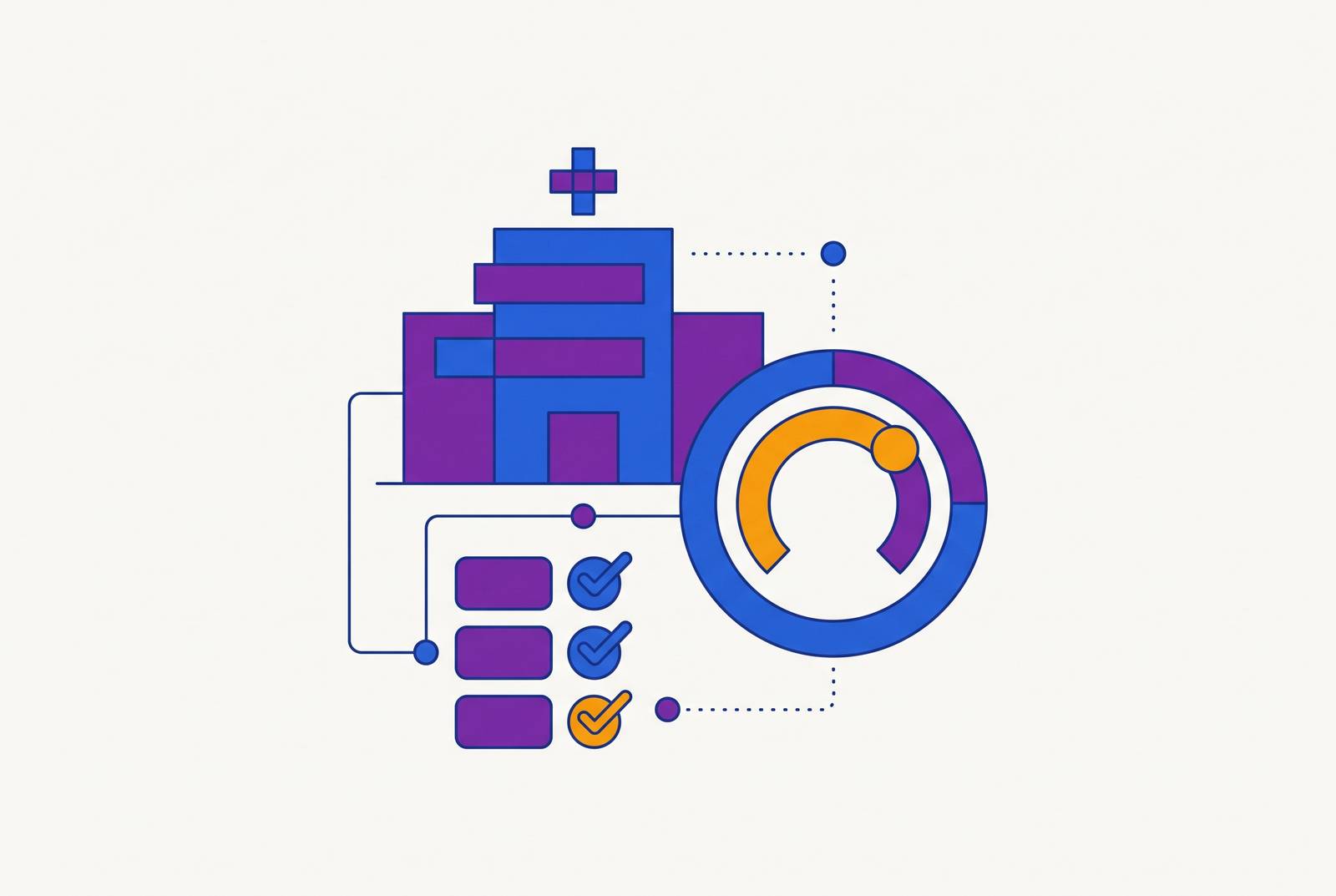
Readiness for AI deployment in healthcare gets treated as a technology question, and that's the mistake that stalls most projects before they start. Practices default to evaluating vendors, comparing integration specs, and asking IT what infrastructure a platform needs. That instinct runs backward. The variable that actually determines how fast a deployment goes live, and how much value it returns, is whether the practice has mapped the workflows it intends to hand over, and no vendor comparison substitutes for that internal work.
Practices that start with a workflow audit go live faster, because they set KPIs that mean something within weeks instead of quarters. Skipping the audit leaves a pilot running quietly in the background, getting evaluated, getting re-evaluated, and never scaling into production. Call it pilot limbo. It's common, and it's avoidable, but only if the organization knows what it's automating before it picks who builds it.
The technology stopped being the constraint some time ago. Organizations are running agents in production against prior authorizations, claims appeals, scheduling, and referral management right now. What separates a fast deployment from a stalled one is whether that particular practice has done the internal work of identifying which processes are ready to be handed over, and in what order.
How healthcare AI agents change the meaning of "readiness"
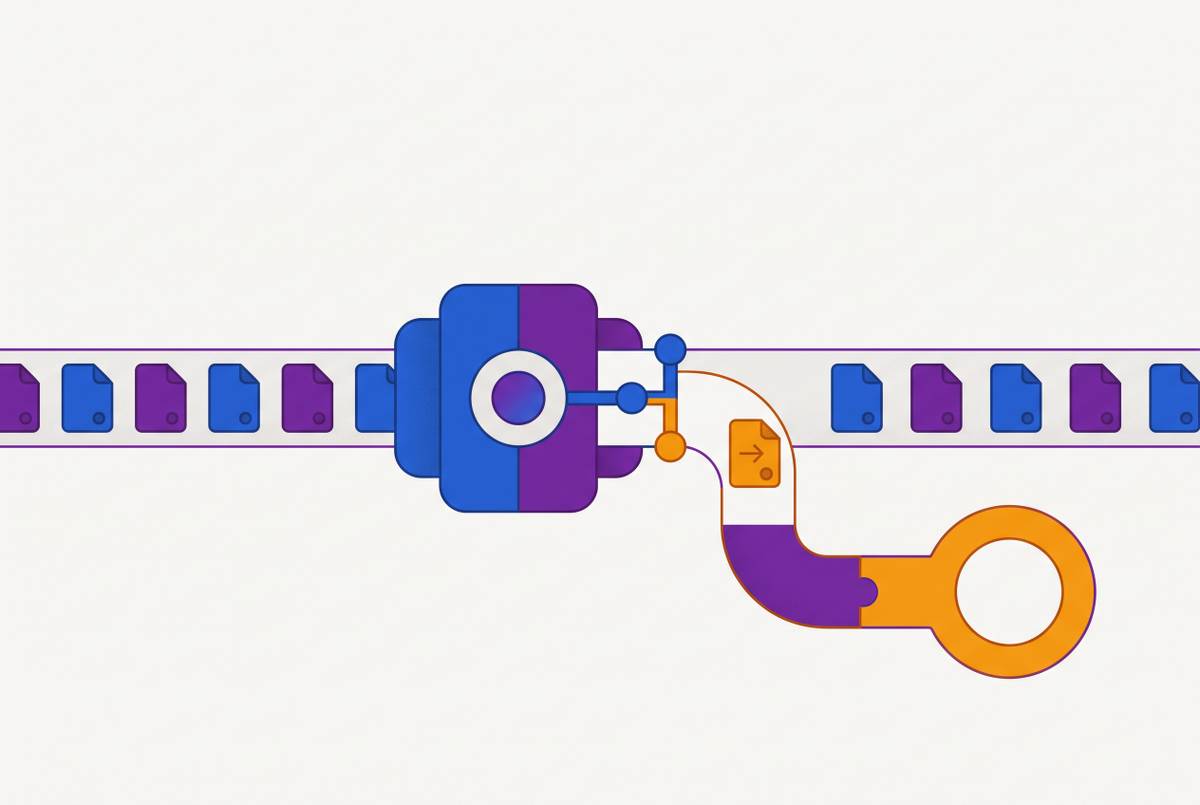
Computer-use agents operate software the way a staff member does: they read what's on the screen, click, type, and move between screens, without an API connection or a rebuilt workflow. The technical loop is plain enough to state in a sentence: take a screenshot, parse what's on it, decide the next action, execute it, repeat. That loop matters in healthcare specifically because so much of the industry runs on legacy EHRs and payer portals that were never built with APIs in mind.
This is what separates agents from the automation tools that came before them. Chatbots answer questions. Robotic process automation follows a fixed script and breaks the moment a screen layout changes. Agents interpret intent, adjust to a shifting interface, and carry a task through to completion rather than stopping at the first answer. One 2026 industry overview described agents as taking "ownership of work across systems and teams, carrying tasks through to completion," language that has nothing to do with answering FAQs or routing queries.
That reshapes what readiness has to mean for a practice. Whether existing systems can talk to a new piece of software was never really the issue. What matters is whether a given piece of work, as currently performed by a human, follows a pattern an agent can pick up and run: screen by screen, system by system, decision by decision.
The administrative burden that makes most practices strong candidates for agent deployment
Administrative costs eat up more than 40% of total hospital expenses, and industry estimates put as much as $360 billion in wasteful spending across the system tied directly to that burden. Over 63% of physicians report symptoms of burnout, and administrative load is the factor cited most often as the driver. Those two figures settle whether a given practice has workflows worth automating. Almost none don't.
Claims volume shows why this isn't a marginal inefficiency. U.S. health systems process something on the order of 9 billion claims a year, and roughly 15% get denied on first submission, often for reasons that were entirely avoidable, such as a missing modifier, a mismatched code, or an incomplete field. Code complexity isn't making this easier, either. 288 new CPT codes took effect January 1, 2026, and 487 new ICD-10-CM codes went live October 1, 2025, and each new code is another place a manual submission can go wrong at scale.
None of this is abstract risk. It's measurable, recurring cost, spread across thousands of individual claims and prior authorizations that a rules-following process is still handling by hand.
The four questions that matter in auditing a workflow for agent readiness
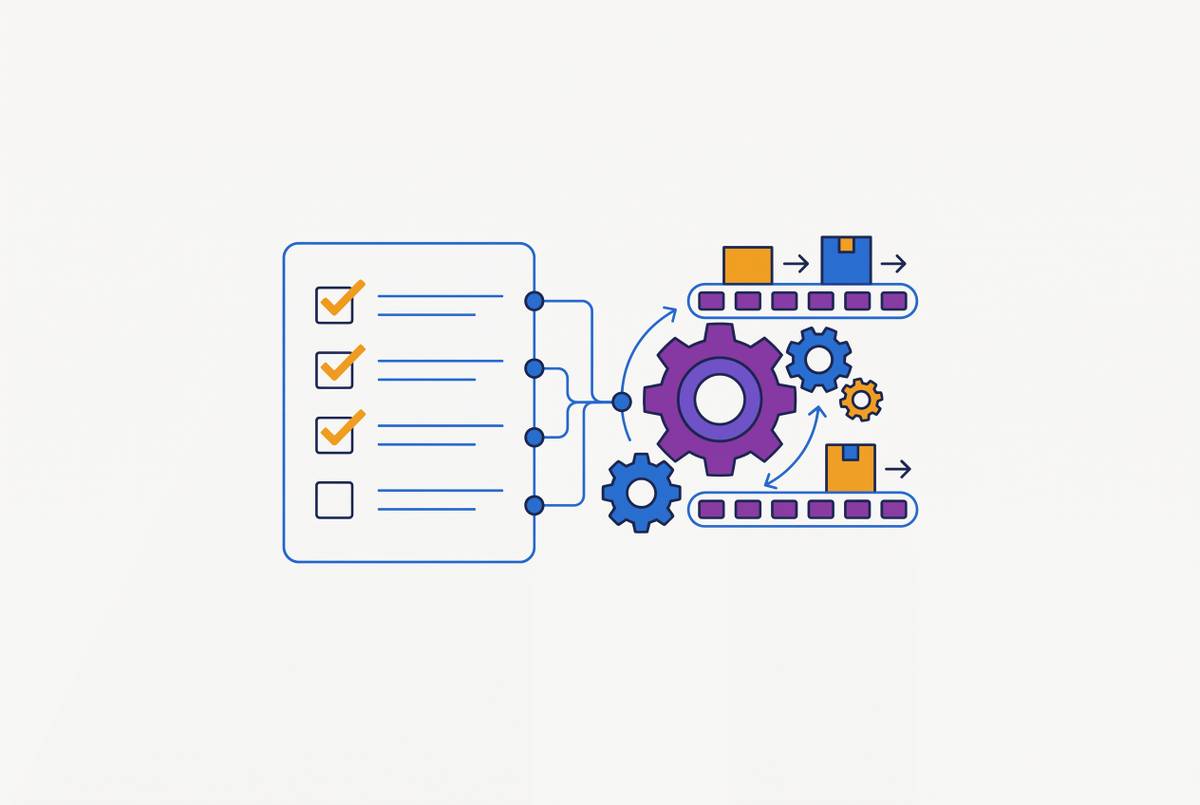
A workflow qualifies as agent-ready when it satisfies four conditions, and the audit itself amounts to walking through these questions, one candidate process at a time.
Start with repetition. Does the work involve the same sequence of steps, applied over and over across many claims, many authorizations, many referral packets, many cancellation-recovery calls? Agents handle this structure best. Workflows that hinge on frequent clinical judgment aren't the first target, administrative execution is, and conflating the two is where a lot of deployment plans go wrong.
Next: is the workflow documented, or does it live only in someone's head? Agents execute documented logic. They can't infer tribal knowledge that was never written down, so a workflow that can't be described step by step can't yet be automated. The fix is straightforward, if unglamorous: shadow whoever owns the process and write down every step, every system it touches, every decision rule applied along the way. That gap, more often than not, is the first item on the pre-deployment task list.
Then count the systems. A process that touches the EHR, a payer portal, a fax queue, the scheduling system, and a clearinghouse creates drag on a human staff member at every handoff, and every one of those handoffs is where an agent gains ground on a human. Computer-use agents don't need those systems integrated with each other. They operate each one through its own screen, exactly the way staff already do, with no API project and no middleware to build. Mapping that system sequence for each candidate workflow is, in effect, mapping the operating environment the agent will live in.
Staffing patterns as a readiness signal (what the schedule tells you before you talk to a vendor)
Before a practice ever opens a conversation with a vendor, the staffing schedule has usually already told most of the story. Where does overtime cluster? Which queue backs up every Monday morning, and which task list balloons the moment one specific person calls out sick? Those signals cost nothing to read. No consultant, no software trial, just a look at where the team is straining against capacity it doesn't have.
An overburdened team functions as a diagnostic instrument as much as a cost line, because it shows, with real precision, exactly which workflows are running past what a human being can sustain. A Salesforce survey of 500 U.S. healthcare professionals gives a useful benchmark: administrative staff estimated agentic AI would give back roughly a full workday every week, while clinical teams put the figure at freeing up around 36% of their paper-based work time. Treat those numbers as a rough scale for what redeployed staff time might look like once an agent takes the repetitive layer off the job.
This raises a harder question: does leadership know, at the task level, where staff time actually goes, or is administrative time tracked only at the role level? Does leadership know, at the task level, where staff time actually goes, or is administrative time tracked only at the role level, in the vague sense of "front desk handles scheduling"? Task-level time data is the input a deployment needs to prioritize which workflow goes first and to set KPIs that mean anything. If that data doesn't exist, the honest pre-deployment step is a time study, run before any vendor conversation, not after.
Where the revenue cycle sits in a readiness assessment
Revenue cycle workflows check every box on the readiness audit at once: high volume, rule-following steps, several systems crossed per claim, and a failure cost that's easy to put a number on. That's why it's the place most practices should start, before other pilots stall.
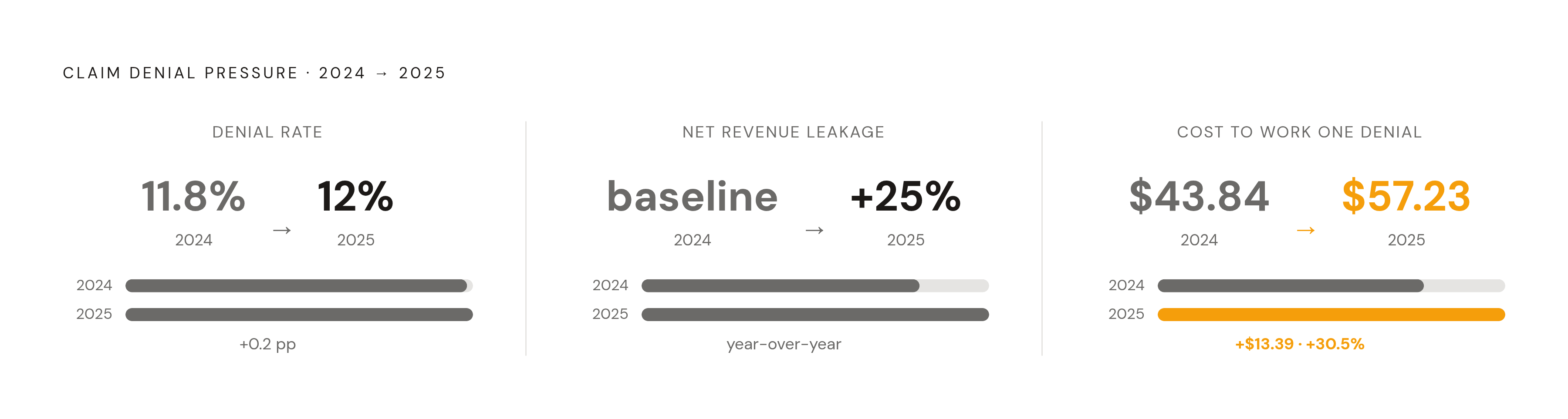
Denials are the clearest test case. Denial rates averaged 11.8% in 2024 and climbed to roughly 12% in 2025, and net revenue leakage tied to denials grew 25% year over year across that same span. Hospitals spent nearly $18 billion overturning denials in 2025 alone, and the unit economics have gotten worse: the average cost to work a single denial rose from $43.84 to $57.23 https://www.cedar.com/blog/five-ways-ai-is-improving-revenue-cycle-management-in-2026. Payers, meanwhile, are running their own AI to review and deny claims in seconds, a pace no manual provider-side workflow can match. That asymmetry is the readiness check in miniature: is the current denial management process documented and tracked closely enough that it could be handed to an agent tomorrow? Black Book Research's evaluation of AI in revenue cycle management found 83% of organizations saw claim denials drop by at least 10% within six months of automation, with the most mature deployments hitting 30 to 40% reductions https://stealthagents.com/research/ai-revenue-cycle-management-automation-statistics-2026.
Prior authorization sits right next to denials in the same audit. The traditional process runs a staff member through identifying that an authorization is needed, locating the correct payer form, gathering clinical documentation, filling the form out by hand, submitting it through a portal, and following up, sometimes repeatedly, until it clears. Every step there is individually agent-executable: determination, evidence assembly from the clinical record, portal submission, status follow-up. Mapping that sequence usually reveals exactly where the current human process is breaking down.
Most organizations are behind on making this call. In 2025, more than 30% of providers had prioritized AI and automation across seven or more revenue cycle use cases, up from four or five in 2023 and 2024 https://stealthagents.com/research/ai-revenue-cycle-management-automation-statistics-2026. A practice without its own named priority use cases is already losing ground to competitors compounding an advantage that widens every quarter.
Scheduling and referral workflows (the capacity problem that staffing cannot solve)
Scheduling and referral management carry the same profile as the revenue cycle: repetitive, multi-system, high volume, expensive to get wrong. The market has already priced this in. The AI patient scheduling software segment was valued at roughly $99.02 million in 2026 and is projected to reach $311.22 million by 2031, a 25.74% compound annual growth rate https://www.mordorintelligence.com/industry-reports/ai-in-patient-scheduling-software-market. A growth curve like that doesn't wait for the practices still deciding to run an audit.
An MGMA poll found no-shows were the leading patient-access concern heading into 2026, with online scheduling, phone access, and wait times close behind. These aren't complaints about scheduling philosophy. Workflow failures produce these patterns, and an audit is built to surface them.
Cancellation recovery is the sharpest version of this test. When a slot opens up unexpectedly, how many staff members does it take to fill it, across how many systems, and how long does that take from cancellation to a confirmed replacement? If the honest answer is "it depends on who's working that day," the workflow isn't documented yet, and it needs to be before anyone hands it to an agent.
Compliance posture as a readiness dimension (what HIPAA means for an agentic deployment)
Compliance doesn't get a separate rulebook because the operator is software instead of a person. HIPAA's Privacy and Security Rule obligations apply to an agent handling protected health information the same way they apply to a human staff member, because the agent is functionally part of the workforce touching that data. Any AI vendor accessing PHI on behalf of a healthcare organization is, by definition, a business associate under HIPAA, and a signed business associate agreement has to be in place before the agent processes a single patient record.
That agreement has to do more than exist on paper. It needs to specify, in concrete terms, how the AI model interacts with PHI while executing a task, and what security measures protect that data as it moves through the agent's pipeline. It should also settle what happens to the data once the task is done: where it's retained, how it's used to train a model, and what audit trail distinguishes agent-generated actions from human-reviewed ones.
Timing matters, too. Any practice moving toward an agentic deployment should confirm its compliance framework already accounts for the current code sets and reporting rules, rather than treating that as a footnote to revisit later. Half of healthcare leaders cite data privacy and security concerns as the single biggest barrier to AI adoption, and only 63% of providers are using AI at all, mostly for lower-risk tasks, which suggests the industry's caution here is earned rather than reflexive https://www.experian.com/blogs/healthcare/rcm-and-ai/. Readiness, in the end, isn't only about which workflows an agent can pick up. It's about whether the practice has already built the governance those workflows will run inside, before the first task gets handed over. 288 new CPT codes went live on January 1, 2026 https://qualigenix.com/cms-prior-authorization-rules-2026-stop-losing-revenue-to-preventable-denials/. 60% of healthcare executives still haven't implemented any automation or AI in their revenue cycle operations https://qualigenix.com/cms-prior-authorization-rules-2026-stop-losing-revenue-to-preventable-denials/. Over 63% of physicians report symptoms of burnout https://www.sully.ai/blog/streamlining-clinical-workflows-through-advanced-automation-in-healthcare. Administrative costs represent over 40% of total hospital expenses https://www.sully.ai/blog/healthcare-workflow-automation. Automation could eliminate up to $360 billion in wasteful spending across the U.S. healthcare system https://www.sully.ai/blog/healthcare-workflow-automation. Ambient documentation tools cut physician charting time by 40–45% https://www.alphabold.com/ai-agents-in-healthcare/. Administrative employees estimated that with the help of AI agents, approximately one full workday would be regained every week https://appinventiv.com/blog/ai-in-healthcare-administration/. Clinical teams believed that with the aid of agentic AI, they would free up up to 36% of their paper-based work time https://appinventiv.com/blog/ai-in-healthcare-administration/. 63% of healthcare organizations have already integrated AI-powered solutions into their revenue cycle https://www.sully.ai/blog/healthcare-workflow-automation. The U.S. faces a projected physician shortage of up to 86,000 doctors by 2036 https://www.healthdatamanagement.com/articles/how-ai-can-help-health-systems-turn-capacity-into-access. AI workflows saved 2.5 million hours across health systems in 2025 https://www.mordorintelligence.com/industry-reports/ai-in-patient-scheduling-software-market. 92% in-network referral rates are being reported by organizations deploying AI-driven referral management platforms https://referralpoint.ai/blog/ai-healthcare-referrals-machine-learning-specialist-selection. Organizations deploying AI-driven referral management platforms are reporting 38% reductions in cost per referral https://referralpoint.ai/blog/ai-healthcare-referrals-machine-learning-specialist-selection. Organizations deploying AI-driven referral management platforms are reporting 64% reductions in time to scheduled appointment https://referralpoint.ai/blog/ai-healthcare-referrals-machine-learning-specialist-selection. The global healthcare system is expected to face a shortage of 10 million workers by 2030 https://www.kore.ai/blog/ai-agents-in-healthcare-12-real-world-use-cases-2026. Around 15% of healthcare claims are denied on first submission, often for avoidable reasons https://www.kore.ai/blog/ai-agents-in-healthcare-12-real-world-use-cases-2026.