PHI Data Minimization Obligations When Deploying Automation Agents
Automation agents expose PHI across multiple systems and logs beyond traditional compliance checks.

Deploying an automation agent on a healthcare administrative workflow is not the same as handing a staff member a new login. A human biller working prior authorization opens one chart, fills one form, and closes the browser when the task is done. An agent doing the same task works across many systems, and there is no point where it naturally stops, so it picks up protected health information at every step, with nothing in its design telling it what to leave alone.
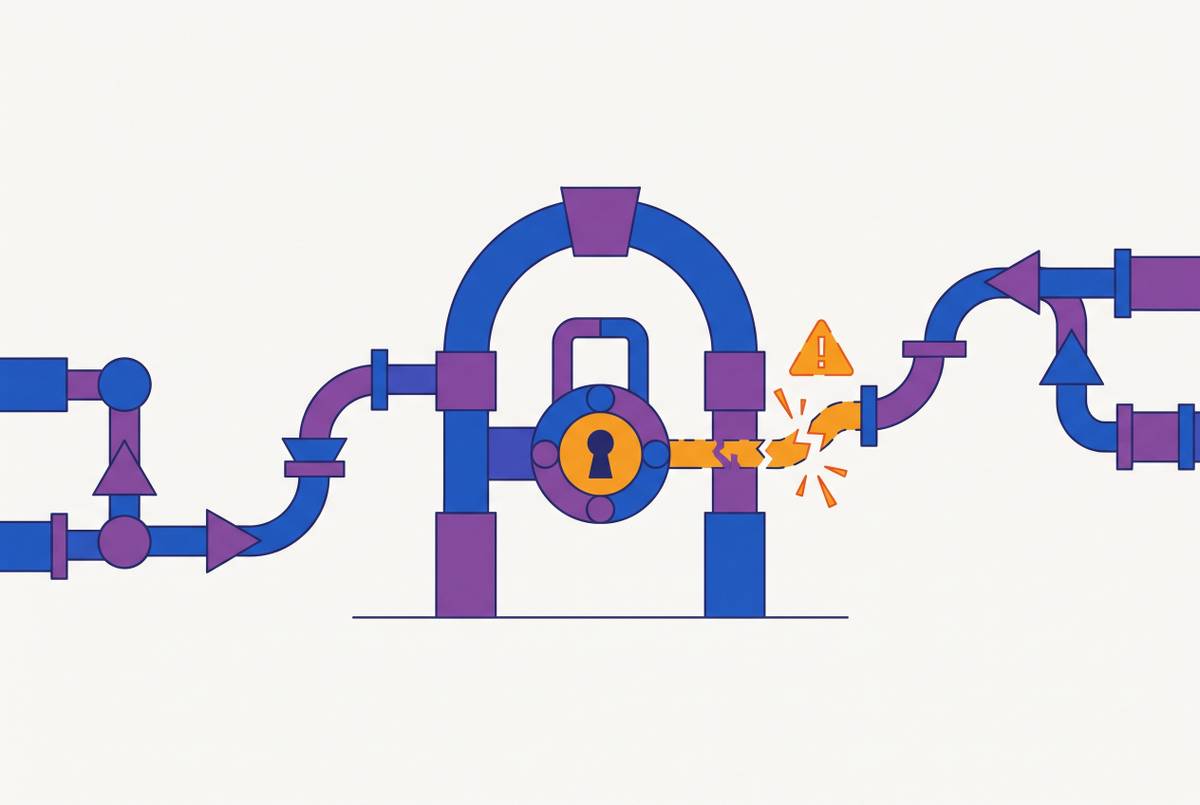
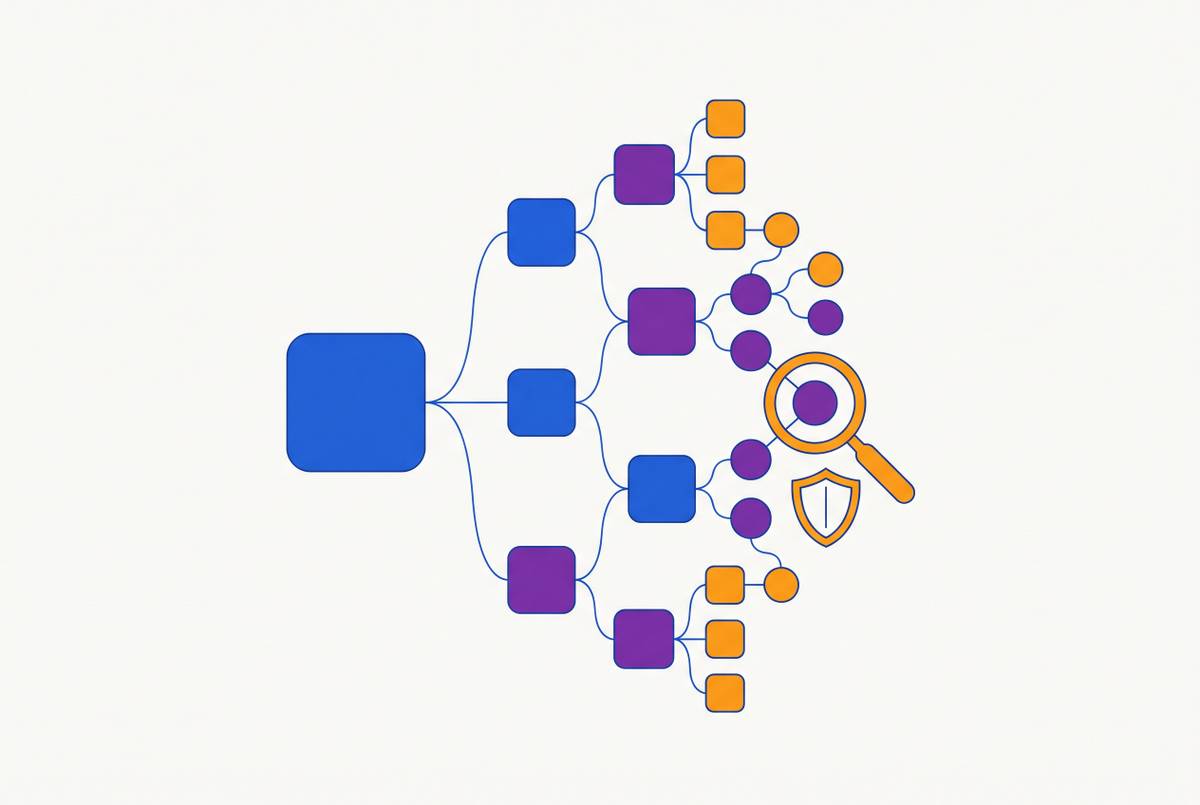
What happens when an agent works a payer portal from start to finish? It can load a full patient record into its context window, send that record through a model endpoint, write a copy to a prompt log, and cache embeddings of the content for later retrieval. Each of those is a separate location where PHI now lives, and each runs on its own retention clock. The exposure surface is layered: PHI enters an AI pipeline through retrieval windows, through prompt logs, and through model outputs, not only through the primary application database that most security reviews are built to examine. Screen-operating agents carry a further risk that a human worker does not: adversarial content embedded in the web pages or portal interfaces they read can manipulate what the agent extracts and where it sends it.
Standard HIPAA compliance checklists exist to confirm that a business associate agreement is signed, that data is encrypted at rest and in transit, and that access controls are in place. Those checks were built for systems that store and retrieve data on request. They were not built for systems that act on their own initiative across a chain of tools and services. The checklist does not ask what an agent's context window holds at step three of a seven-step workflow. It does not ask if prompt logs keep PHI past the retention period the organization set. It does not ask whether the agent's tooling scope matches the task in front of it, or whether that agent quietly has read access to an entire EHR. None of this means HIPAA itself falls short. It means the operational habit of checking a box next to "BAA signed" was never designed to catch what an autonomous system does between the moment it starts a task and the moment it finishes, or fails to finish, it.
The minimum-necessary standard and its extension to autonomous systems
The rule that governs all of this is the minimum-necessary standard: if protected health information is involved, covered entities have to cut access down to the lowest level the task in front of them needs. A claim that a larger dataset would improve an algorithm's performance does not change that obligation. Performance is a separate conversation that has to happen inside the boundary the standard sets.
An agent holds a role in a workflow in the same way a staff member does, and its access should be scoped to that role and nothing wider. An agent built to verify eligibility needs a patient's name, date of birth, member ID, payer, and service type. It does not need clinical notes or medication history to do that job. An agent built to submit a prior authorization request needs diagnosis and procedure codes and the clinical justification tied to that specific request. It does not need the full chart. An agent built to schedule appointments needs a name, contact information, appointment type, and availability. The only data it needs is a diagnosis for scheduling purposes, which it never requires. These are not arbitrary restrictions; they follow directly from how the Privacy Rule limits uses and disclosures to what a purpose actually requires, and the Security Rule mirrors that limit in its access management requirements, authorizing access to electronic PHI only when it fits the user's or recipient's role.
A 2025 proposal to the HIPAA Security Rule turns this principle into something closer to a documentation requirement. It calls for covered entities to maintain a written inventory of technology assets, AI systems included, that create, receive, maintain, or transmit electronic PHI. That shifts minimum-necessary from a standard an organization is expected to honor in spirit into an obligation it has to show in writing, asset by asset, system by system. An agent stood up informally, without a documented account of what it touches and why, now sits outside that inventory requirement before it has processed a single record.
Retention compounds the exposure. HIPAA says policies and authorizations tied to PHI have to be kept for six years, and some states push that period further, especially where pediatric records are involved. Every log an agent generates, every prompt archive, every cached embedding, falls under that same clock. An organization that has not accounted for where an agent's byproducts live has not met its retention obligations either, regardless of how well the primary application is secured.
Where agents commonly violate the minimum-necessary standard
The violations that show up in deployed agents are rarely deliberate. They are architectural defaults, which makes them more durable and harder to spot than a one-off mistake. Agents tend to load more PHI than a task requires because narrowing access is harder engineering work than simply granting it. They tend to hold onto PHI longer than authorized because the prompt logs and observability tools wrapped around them were built to help engineers debug a system, not to govern what that system is permitted to retain.
The clearest version of this is context-window loading. When a screen-operating agent works a payer portal, it typically loads the full patient record into its context window for every session, far past what the task in front of it calls for. The engineering answer to this tends to be that the agent only acts on the piece of the record it needs, even though the whole record passed through it. That is a materially different risk profile than a design that sends four fields and nothing else, because the record sat somewhere the agent could read it, reason over it, and potentially log it, whether or not it ended up using all of it.
Prompt logs create a second, quieter version of the same problem. Debugging traces, prompt archives, and vector stores all retain the content that passes through them. So a deletion request can clear a record from the primary database, but that same PHI can still sit in an observability platform for however long its default retention period runs. Prompt logs are among the most commonly overlooked PHI stores in AI systems precisely because they were built as an engineering convenience, not as a location anyone thought to govern.
Broad FHIR scopes and persistent conversation memory add a third failure mode. An agent granted a wide FHIR scope to make one integration easier ends up with standing access well beyond the task it was deployed for. Memory that persists across sessions makes this worse: PHI loaded for one task can remain accessible to the agent during a completely unrelated task that follows it, with no natural reset between the two.
Incomplete task abandonment is the failure mode specific to autonomous systems, and it has no real counterpart in human workflows. The HealthAdminBench study out of Stanford found that even the best-performing computer-use agent completed only 36.3% of healthcare administrative tasks end to end. So most attempted workflows end midway, and if an agent stops partway through a prior authorization or an eligibility check, it can leave PHI sitting in a loaded context window, in a log, or half-written onto a portal form. A human staff member who gets interrupted closes the chart. An abandoned agent session often does not close anything.
PHI also travels through more locations than most evaluations account for: the vendor's own application, the model provider's inference infrastructure, the cloud host underneath it, telephony or document services if the workflow touches voice or fax, and the logging and observability layer wrapped around all of it. Each of those is a place PHI exists, and each needs its own coverage. A model provider can be swapped behind the scenes without any visible change to the product a practice administrator sees, and the subprocessor list behind that product can change with it, silently breaking the chain of agreements the organization believed it had.
The five architectural layers that enforce minimum-necessary compliance
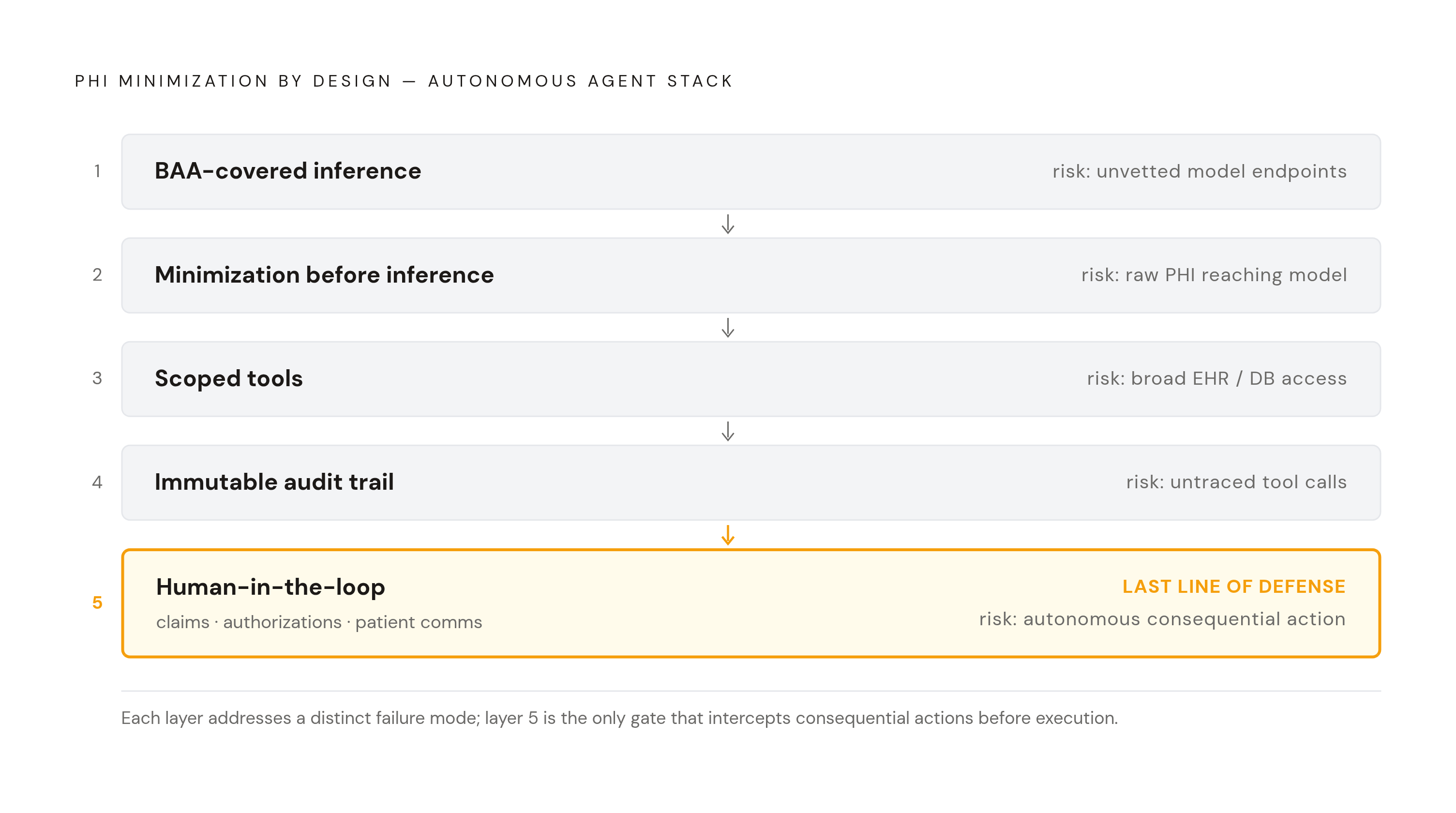
PHI minimization in an autonomous agent gets enforced by how the system is built. A prompt instructing an agent to "be HIPAA compliant" does not change what data actually moves through the model, the logs, and the tools underneath it. Compliance has to be designed into five layers, and each one answers a specific failure mode described above.
The first layer is BAA-covered inference. The model endpoint an agent calls has to run under a signed business associate agreement, which rules out consumer-facing model endpoints. That coverage comes either through a cloud provider's enterprise offering, such as AWS Bedrock, Azure OpenAI, or Google Vertex, or directly through a model vendor's enterprise tier where a BAA is available. Coverage has to extend to every service that touches PHI along the way, including the vector database and the observability platform, because the chain holds only as well as its weakest untracked link. A named subprocessor list, with advance notice before any change to it, is the practical requirement here, not a static agreement that assumes the infrastructure behind it never changes.
The second layer is minimization before inference ever happens. The orchestration layer sitting in front of the model decides what the model actually needs to see, and identifiers should be de-identified or tokenized before that data reaches the model, then re-hydrated afterward for anyone authorized to see the full record. A model that never receives a patient's name can never expose it. De-identification carries a specific legal bar under HIPAA: either expert determination by a qualified statistician, or safe-harbor removal of eighteen specified identifier types. Masking a name while still passing dates of service, a ZIP code, and an account number does not clear that bar; the record remains identifiable even with the name gone.
The third layer replaces open access with scoped tools. Instead of raw database or EHR access, an agent should receive narrow, purpose-built functions, something closer to "fetch this patient's active medications" than a general query interface. Each tool enforces role-based access the same way it would for a human user operating under the minimum-necessary role for that task. The agent inherits whatever permissions that role carries and never escalates beyond them.
The fourth layer is an audit trail that cannot be altered after the fact: every tool call, every input and output, every model version in use, with timestamps and a record of which human session the agent was acting on behalf of. An agent whose actions cannot be reconstructed afterward cannot be deployed responsibly, because there is no way to answer a question about what it did or why. The log itself is a PHI store and needs governance of its own: who can read it, how long it is kept, and whether it gets swept up in deletion requests the way any other PHI location would.
The fifth layer puts a human in the loop before consequential actions execute. Agent actions split into three categories: read-only actions that can run autonomously, reversible writes that can run autonomously under a review queue, and consequential actions, anything touching claims, authorizations, or direct patient communication, that require explicit human approval before they execute. HIPAA does not prohibit an agent from acting on its own. Access has to be attributable and reviewable, and full autonomy makes that kind of accountability hard to maintain unless a human session or an approval chain stands behind the action.
BAA coverage structure for agents spanning multiple systems and subprocessors
One business associate agreement with an AI vendor rarely covers what an agent deployment actually touches. An agent that passes PHI through a model endpoint, a vector database, an observability platform, and a cloud host is passing it through four separate subprocessors, and each one needs its own agreement. The covered entity remains responsible for confirming that the full chain holds, not just the first link in it.
HHS requires a business associate to obtain the same contractual assurances from its own subcontractors that the covered entity obtained from the business associate. That obligation flows down the chain rather than stopping at the vendor the practice signed with directly. An AI vendor becomes a business associate the moment its agent processes a workflow or conversation containing PHI, and using that agent without a signed BAA in place is a compliance violation regardless of how well the vendor has secured its infrastructure. If a BAA covers an agent deployment, it needs to spell out permitted uses of PHI, data protection requirements, breach notification obligations, and the duties owed by any subcontractor in the chain. A generic or templated agreement that does not account for inference infrastructure does not meet that bar, even if it was signed in good faith.
Four specific commitments matter for agent deployments in particular. You need a named subprocessor list with advance notice before any change, because model providers can get swapped behind a product's front end and the practice may never see it happen. A contractual prohibition on using the practice's PHI to train shared models, since prompts and outputs that reach a shared model endpoint for training purposes constitute a disclosure under HIPAA. A breach-notification obligation tied to a specific timeframe, because a vendor's promise to notify "promptly" commits to nothing enforceable. And a kill-switch provision, giving the covered entity the ability to halt the agent and cut off its access to PHI the moment a breach is suspected or an audit begins.
Security certifications such as SOC 2 Type II or HITRUST, a documented audit history, penetration testing records, and a written risk management process are the floor a vendor needs to clear to be considered at all, not evidence that sets one vendor meaningfully apart from another. The covered entity carries responsibility for confirming vendor compliance even when the vendor manages the infrastructure end to end, and that responsibility does not go away just because the vendor holds strong certifications.
Prior authorization automation and concentrated minimum-necessary risk
Prior authorization draws together every risk described above inside one workflow, which is part of why it has become a common early target for automation and one of the riskiest to get wrong. The task spans at least two systems by design, the EHR on one side and a payer portal on the other, and an agent working it has to carry clinical justification, diagnosis codes, and procedure codes across that boundary while leaving the rest of the chart behind. Prior authorization is also one of the lowest-completing task types for current computer-use agents: a stalled session here leaves PHI exposed, in a context window or half-written into a payer form, more than almost anywhere else in administrative automation. An agent scoped correctly for prior authorization carries only the diagnosis and procedure codes and the specific clinical justification the request needs, nothing drawn from unrelated encounters, and if it cannot reliably finish the task end to end, it needs the same human-in-the-loop gate the fifth architectural layer calls for, so a stalled session never leaves PHI sitting exposed in a system no one is watching.