Vendor Demo Red Flags for Healthcare Automation Buyers
Spot vendor theater before signing a contract by asking the right demo questions.

Healthcare executives are walking into 2026 with a mandate to automate, and vendors know it. Seventy-two percent of healthcare executives say investing in technology like automation and AI is their top priority for the coming year, and 61% of organizations report they're already building or budgeting for agentic AI initiatives. That urgency is rational: administrative costs eat more than 40% of total hospital expenses, and estimates suggest automation could eliminate up to $360 billion in wasteful domestic healthcare spending. healthcare spending. But a well-run sales cycle exploits urgency, because a buyer convinced the window is closing rarely stops to ask what, precisely, they're about to sign.
The global revenue cycle management market alone is estimated at $94.9 billion in 2026, and a market that size draws vendors at every level of quality and maturity. The job here is to bring sharper questions into the room during the window that already exists. It's to bring sharper questions into the room during the window that already exists, the one hour of demo time where most of the real diligence either happens or doesn't.
How a vendor demo is constructed and why "impressive" is not the same as "works in your practice"
Every demo is a curated environment. Controlled data, pre-loaded scenarios, a flow built to go from A to B without friction. None of that resembles the fragmentation inside an actual practice, where referral packets arrive as blurry faxes, patients carry two insurance cards, and payer portals redesign their login screens without warning.
The system on stage might genuinely process a clean referral packet in four seconds. What that demo doesn't tell anyone is whether it has ever touched a handwritten fax, a patient with dual coverage, or a portal that changed its UI last quarter. Two distinct engineering tricks show up here. Capability theater is when the system really can do what's shown, but only under conditions that don't exist in production. Scope theater is when the demo is real and accurate, but it's a sliver, one task out of a ten-step workflow, dressed up to look like the whole thing.
Vendors default to this because they're optimizing for a signature, not a successful rollout, and those two goals diverge more often than anyone in the sales conversation wants to admit. 41% of providers say it's difficult to fully trust AI's results, which reflects their trust in the technology. That skepticism is earned. The fix isn't vague wariness after the fact, it's specific questions asked while the vendor still has something to prove.
The integration claim that sounds complete but usually isn't
"We integrate with every EHR" is a sentence that should stop a buyer cold until the vendor names the tier, the specific objects, and the data flows involved. Vague universality is not a technical claim, it's a marketing one.
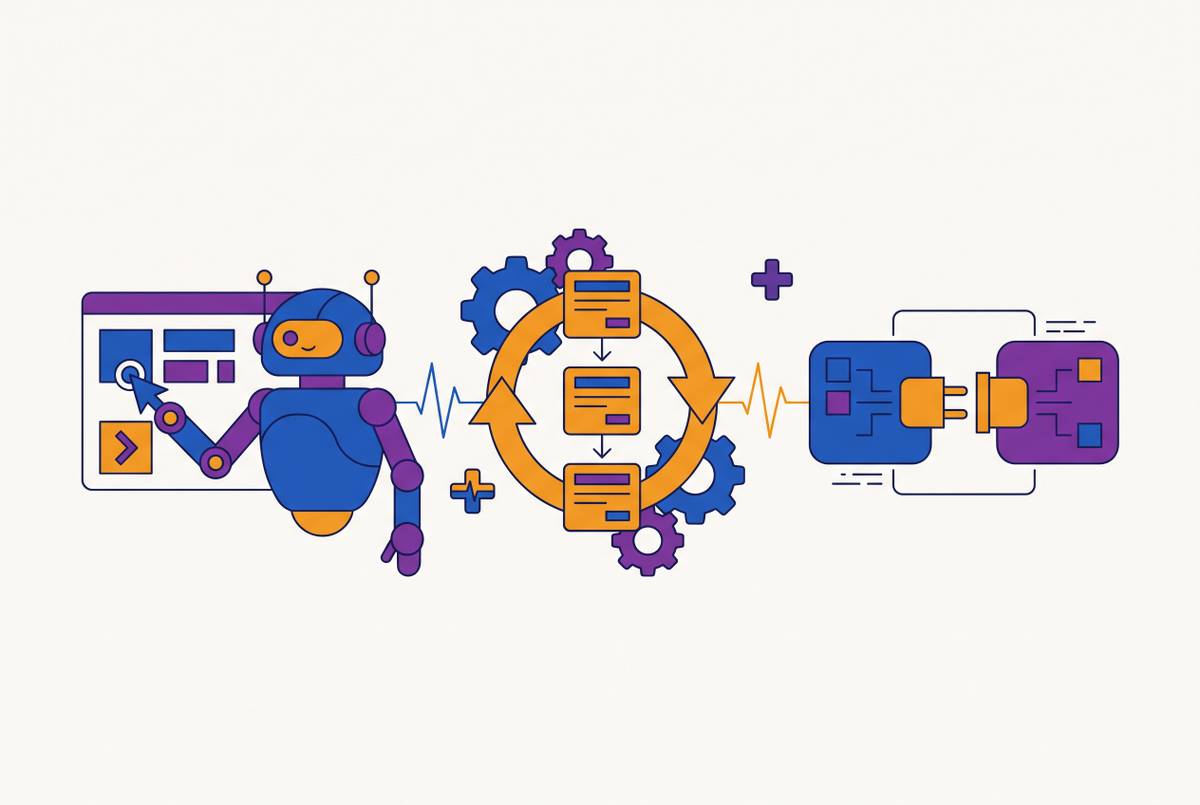
Three integration modes get conflated constantly, and the differences matter enormously. True API integration is bidirectional, structured, and governed by the EHR vendor's own terms, so ask which API, which version, and which objects it actually covers. Screen-operating automation, sometimes called computer-use or GUI-layer automation, has the agent read and click through the interface the way a human would, no API required. It can work across systems that never opened an API door in the first place. Then there's the nightly file export or HL7 batch transfer, frequently marketed as "integration," which in practice means the system is always a day behind, working on yesterday's data while today's patients sit in the waiting room.
GUI-layer automation isn't a weakness by default. It skips the IT project, the EHR vendor's cooperation, and the months-long wait for a roadmap slot. The honest version of this approach says so upfront and comes with a documented plan for what happens when the interface changes overnight. The red flag isn't the technique, it's a vendor who calls screen automation "native integration" or goes quiet when asked what happens the day the payer portal redesigns its login page.
Partnership claims deserve the same scrutiny. "We have a partnership with [EHR vendor]" can mean a joint press release from eighteen months ago, or it can mean a live, paying deployment at a practice your size. Ask which one it is. In the room, three questions cut through most of the fog: is this a live bidirectional connection or a scheduled export, what happens when the EHR or payer portal updates its interface, and how long has this specific integration run in production, at how many sites.
Happy-path demos and what they hide about exception handling
Every system looks competent when the referral packet is clean, the patient has one payer, and the appointment slot is sitting open. That's the scenario in almost every demo, because it's the scenario that makes the product look finished.
Real workflows break in more mundane and more frequent ways than any slide deck shows. A fax arrives unreadable or handwritten. A patient hangs up mid-call or gives two different birthdates in the same conversation. Insurance turns out to be dual coverage requiring coordination of benefits math nobody wants to do by hand. The preferred provider has no opening for over a month, and that's not a hypothetical: new patient wait times in major domestic metros now average 31 days, up from 26 days in 2022. metros now average 31 days, up from 26 days in 2022. A prior authorization expires before it's even submitted. A payer portal throws an error or demands a CAPTCHA a bot can't solve.
The cleanest test available is asking the vendor to run the demo on the buyer's own data, connected to the buyer's own systems, not a sanitized sandbox. Vendors running real production systems will say yes without much hesitation. Vendors running something more brittle will find a reason that's not possible today. Push further: ask to watch the system handle at least two actual failure modes live, not a slide describing how failure is theoretically handled.
How the system escalates to a human matters just as much as how it succeeds. What does the human on the receiving end actually see? What context comes with the handoff, and is any of that escalation logged in a way that can be audited later? These aren't small details. Referral leakage, industry data consistently shows, runs between 20 and 30 percent at manually run practices, so one in four or five referrals never becomes a completed appointment. A system that only performs well on clean cases hasn't solved that problem. It's automated the easy majority and left the hard remainder exactly where it was.
Performance figures vendors publish and how to read them honestly
"98% clean claim rates." "40% denial reduction." "Saves four hours per provider per day." These numbers appear in nearly every RCM pitch deck, and nearly all of them are company-reported, not independently audited.
Context matters enormously here. The share of providers reporting denial rates above 10% stood at 30% in 2022, and hospitals spent nearly $18 billion overturning denials in 2025 alone, at an average cost of $57.23 per claim, up from $43.84 the year before. Any vendor claiming a meaningful denial reduction is claiming it against an industry trend line that's getting worse, not better.
A few questions separate a real number from a marketing number. What was the baseline denial rate at the reference site before this system went live, and what's that site's specialty and payer mix? Is the "clean claim rate" measured at first submission, or only after the claim has already been scrubbed by a human? Does the "hours saved" figure come from an actual time-motion study, or from someone's estimate written into a slide? And over what window was it measured, does that window include the first 90 days post-launch, when volumes are almost always lower than steady state?
Upstream denial prevention and downstream appeals management are not the same discipline, and most legacy rules-based systems only do the latter. Presenting appeals efficiency as if it were a prevention rate is a common sleight of hand. Rules-based systems face a second problem too, since payer policy shifts constantly and coding guidelines move quarterly, so ask how often the vendor updates its rules engine and whether there's version control on those updates. On the documentation side, AtlantiCare documented 66 minutes saved per provider daily from ambient AI scribes, a useful reference point for evaluating similar claims, though it's not a universal benchmark since specialty and visit complexity vary a great deal.
Hallucination risk in agent actions and why demo conditions mask it
Demos run on clean, current, pre-loaded data. Production runs on stale data, ambiguous patient input, and multi-step reasoning chains where one wrong inference early on compounds by step five. That gap is exactly where hallucination risk lives, and it's invisible in a demo by design.
A large-scale evaluation published in early 2025 tested eleven foundation models across seven medical hallucination tasks and found that even models built specifically for medical use stayed vulnerable to domain-specific errors across a range of hallucination tasks. A companion clinician survey found that over 90% of respondents had personally encountered medical hallucinations from AI tools, and roughly 85% considered those hallucinations capable of causing real patient harm.
The operational, non-clinical corners of a workflow carry this risk too, often unnoticed. An agent reasoning over a care plan updated eighteen hours ago that it never actually saw. An agent drafting a prior authorization justification straight from a policy document without cross-checking the patient's actual chart. A documentation agent transcribing an audio feed without validating it against the structured record, recording things that never happened or dropping things that did.
Does the agent check its reasoning against the live patient record before acting, or only against whatever data loaded at the start of the session? Can the vendor show a case where the agent flagged its own uncertainty and escalated instead of plowing ahead? For scribes specifically, does it validate against the structured chart before finalizing a note, or does it just transcribe audio and call it done? Who is liable when a hallucinated note contributes to a denial or an adverse event, even though it makes the room uncomfortable to ask. The vendor's contract has an answer. Read it before signing, not after.
What audit logging and HIPAA compliance require, and how to tell if a vendor meets the standard
Half of healthcare leaders name data privacy and security as the single biggest barrier to AI adoption. That number reflects a real concern, but it only becomes useful once it's turned into specific, answerable questions instead of a vague pass or fail.
Any vendor that creates, receives, or transmits protected health information needs a signed Business Associate Agreement before any PHI reaches its systems. That's a legal floor, not a point of differentiation, and any vendor treating it as a selling point is setting the bar low. A standard BAA usually isn't enough for an AI system anyway. It needs to spell out whether PHI trains the underlying model, how data retention and deletion actually work, and which subprocessors, if any, touch that data downstream.
HIPAA's audit control requirement, codified at 45 CFR §164.312(b), applies to AI-assisted decisions exactly the way it applies to decisions made by a person. Logs need to capture the model version and other relevant decision details, but also the clinician's explicit approval, with a timestamp, a user ID, and a record of any edits made before the action went through. Best practice calls for a clean separation between an AI's recommendation and a human's authorization to act on it. A demo that shows a "human in the loop" screen should be asked, on the spot, to pull up the audit trail proving that loop is real and not cosmetic.
There's a regulatory wrinkle to track too. HHS OCR proposed an update to the HIPAA Security Rule on January 6, 2025, that would eliminate the current distinction between required and addressable safeguards. As of mid-2026 it remains a proposal, not a final rule, and a coalition of industry groups has petitioned HHS to withdraw it. Asking a vendor how they're tracking that proposal reveals what changes if it finalizes. HIPAA certification, meanwhile, is a baseline requirement, not a differentiator. What matters is what the audit log and the BAA actually say line by line, not whether the vendor has the certificate. It's what the audit log and the BAA actually say line by line.
Timeline and implementation claims that signal real production readiness versus sales optimism
How long a rollout takes, and how confidently a vendor can describe that timeline, tells a buyer more about production maturity than almost anything shown on screen. Vendors with real deployment history know their own numbers because they've lived through them more than once.
For purpose-built healthcare AI platforms in 2026, measurable revenue metrics such as completion rate, no-show rate, and revenue per referral should begin appearing within the first few months after go-live. Deployments that stretch past sixteen weeks are usually not failing because of the vendor's core technology. They're stuck on integration friction or stakeholder alignment, and a vendor who can't tell the difference between those two failure modes hasn't done enough deployments to have learned it yet.
A few phrases in a sales conversation should raise an eyebrow immediately. "We'll need your IT team to build the connection" If the product is being pitched as something that works across existing software without any integration work at all, ask what IT is being asked to build. A go-live date that can't be committed to until after a vaguely defined "discovery phase" running longer than a few weeks is another one. So is a rollout plan that automates a single isolated task rather than a full workflow start to finish, because partial automation tends to deliver partial results while adding a new coordination burden on top.
That last point deserves its own scrutiny. A system that automates inbound scheduling but stops the moment eligibility verification begins hasn't fixed the bottleneck that occurs when eligibility verification begins. It's just moved the bottleneck one step further down the line. Before signing anything, ask for a reference call, not a written case study, with a practice of comparable size and specialty that's been live for more than 90 days. For multi-location groups or portfolios backed by outside investors, ask specifically how the vendor handles protocol variation across sites and whether scaling to a new location means re-engineering the whole thing from zero.
The evaluation framework: eight questions to bring into every healthcare automation demo
None of this is meant as a gotcha list designed to trip vendors up. It's a conversation guide, and the vendors worth working with will answer these questions without flinching, because they've answered them before.
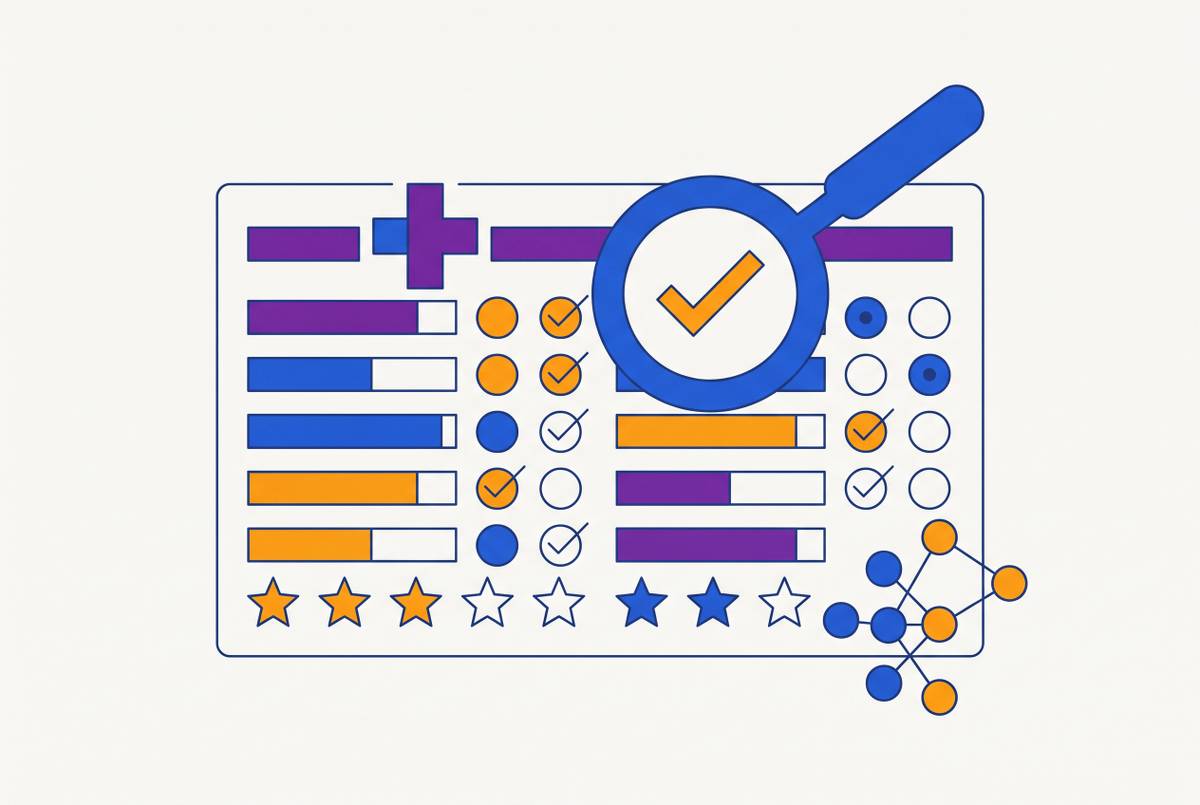
Bring these eight into the room. First, can the system run on the buyer's actual data, connected to the buyer's actual systems, rather than a sandbox built for the pitch. Second, is the integration a live bidirectional connection or a scheduled batch export, and what happens the day the EHR or payer portal changes its interface. Third, can the vendor demonstrate at least two real failure modes live, and describe how the system escalates to a human when it hits one. Fourth, what's the actual baseline behind any published performance metric, including the reference site's specialty, payer mix, and the measurement window used. Fifth, does the agent validate its reasoning against the live patient record before acting, and can the vendor show a moment where the system recognized its own uncertainty and stopped. Sixth, does the BAA address model training on PHI, data retention, and subprocessors, and can the audit log actually prove a human approved an action the system suggested, timestamp and all. Seventh, what is the real implementation timeline based on comparable deployments, not the aspirational one in the sales deck, and can a reference customer live for more than 90 days confirm it. Eighth, does the rollout plan automate a complete workflow end to end, or does it hand off partway and quietly create a new bottleneck somewhere downstream.
None of these questions require an adversarial tone. They require specificity, and specificity is the one thing a demo engineered for impulse buying is least equipped to survive.